The Drum Makers of Tintanga
Location:Gumla, Jharkhand, India
23.0448° N, 84.5422° ECamera -
01
THREE KILOMETRES FOR CLAY
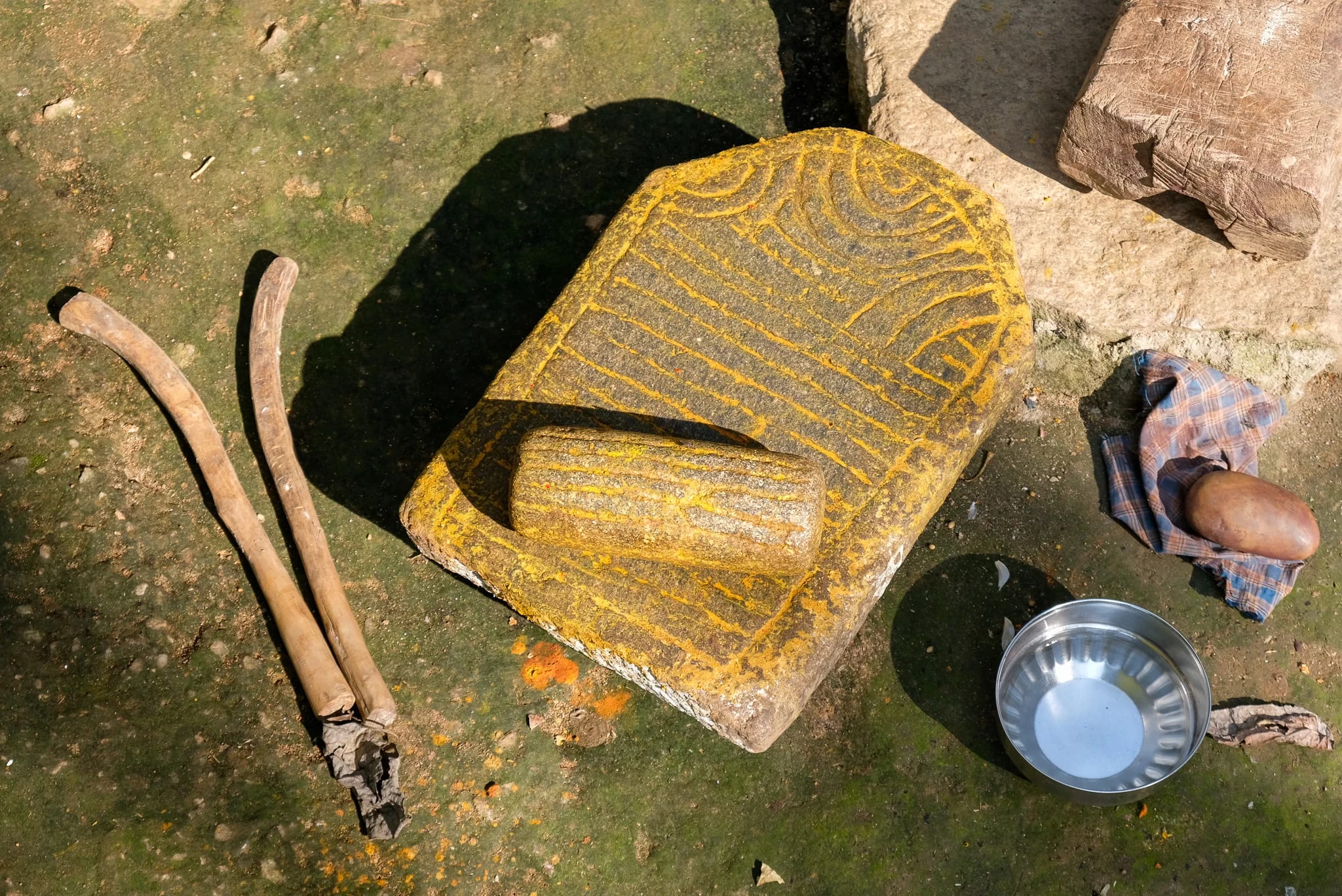
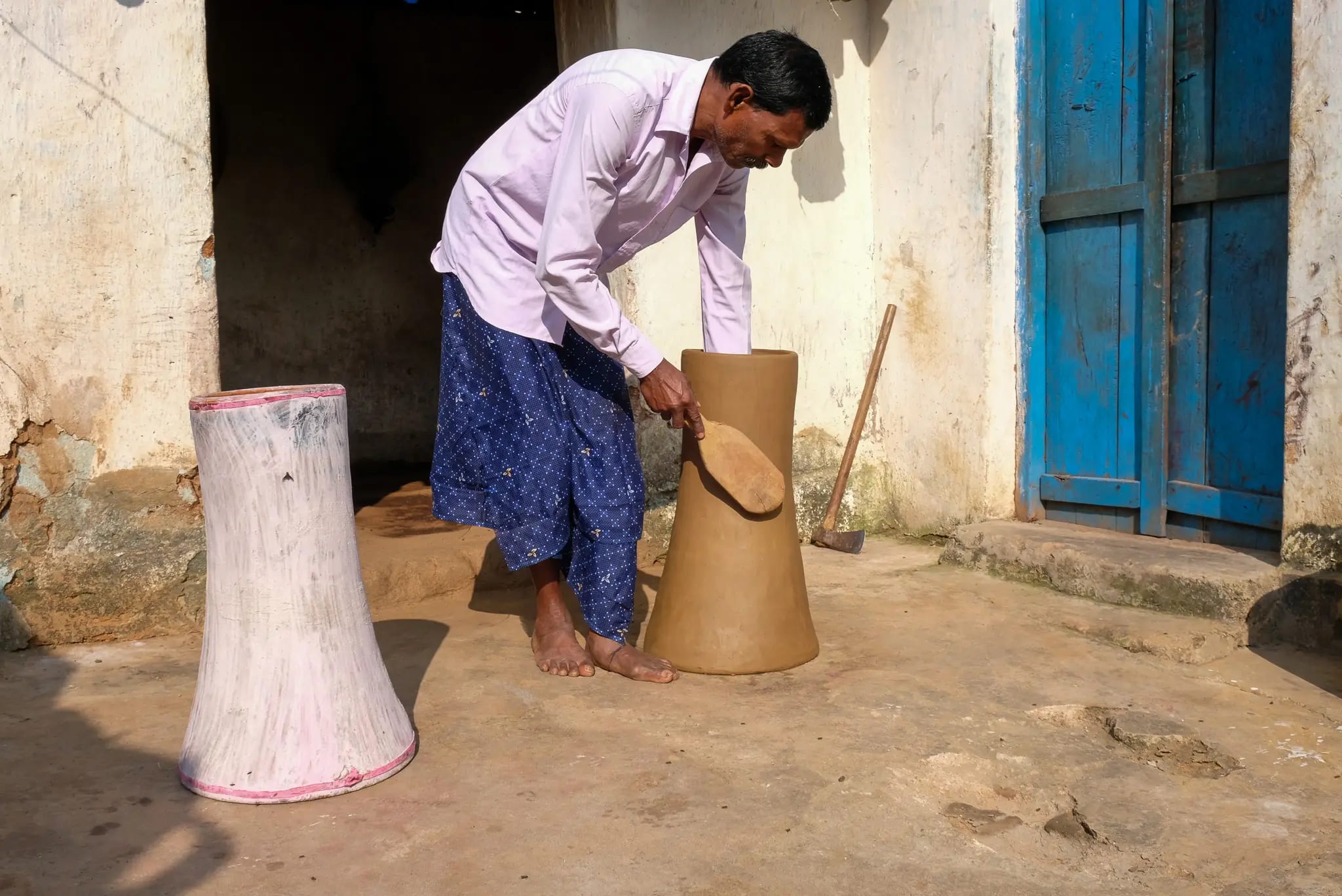
Deepak Naik walks three kilometres for clay. Not just any clay, but the specific kind that holds sound properly when shaped into a mandar, the traditional drum played during Holi and festivals across Jharkhand. By the time he returns to Tintanga village in Chainpur Block of Gumla district, he's carrying enough weight to make his arms ache.
He drops the clay in his workspace and begins the hardening process, applying pressure and letting it compact. Over the next several days, he'll tap and shape it into a drum. His hands know the work without thinking.
02
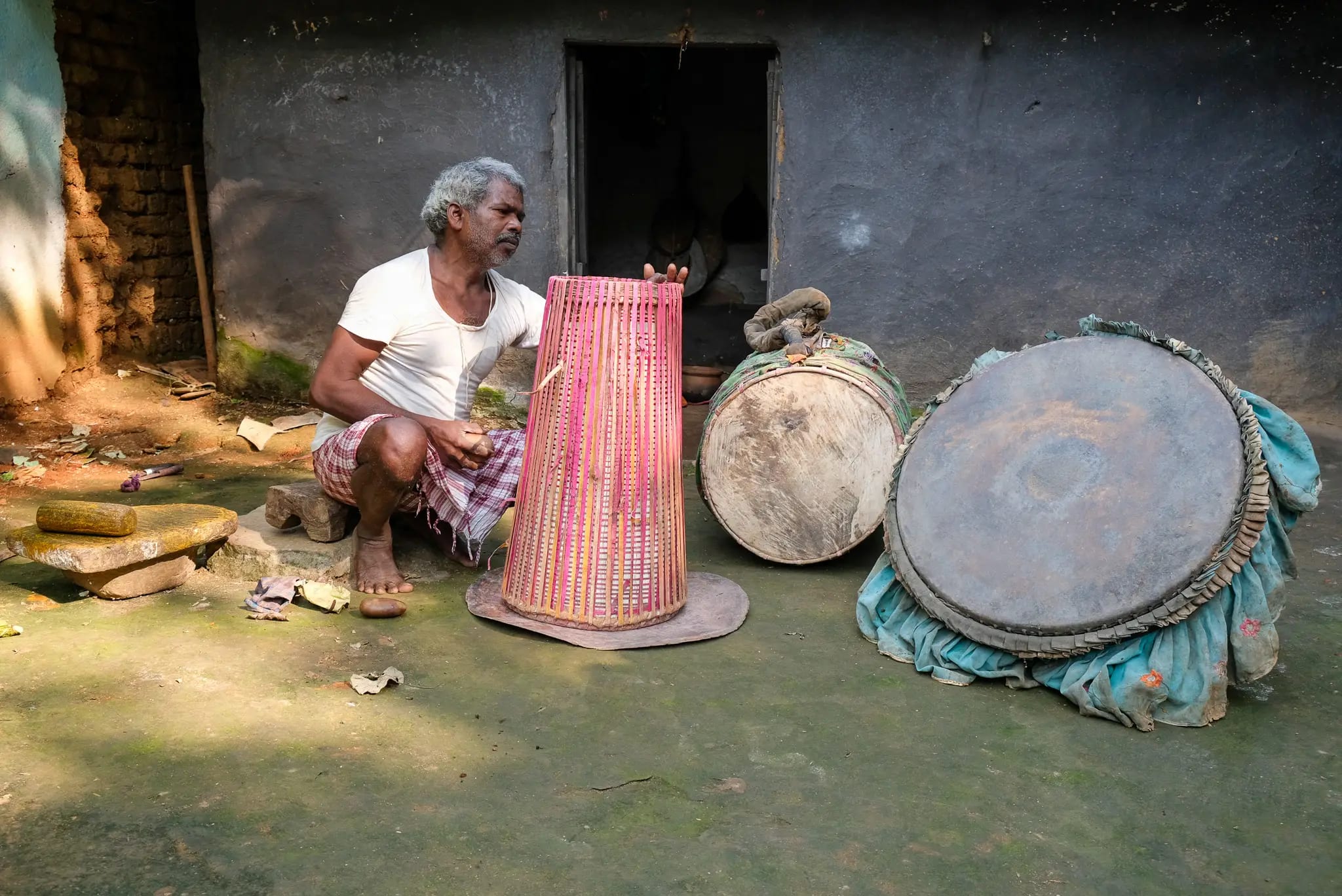
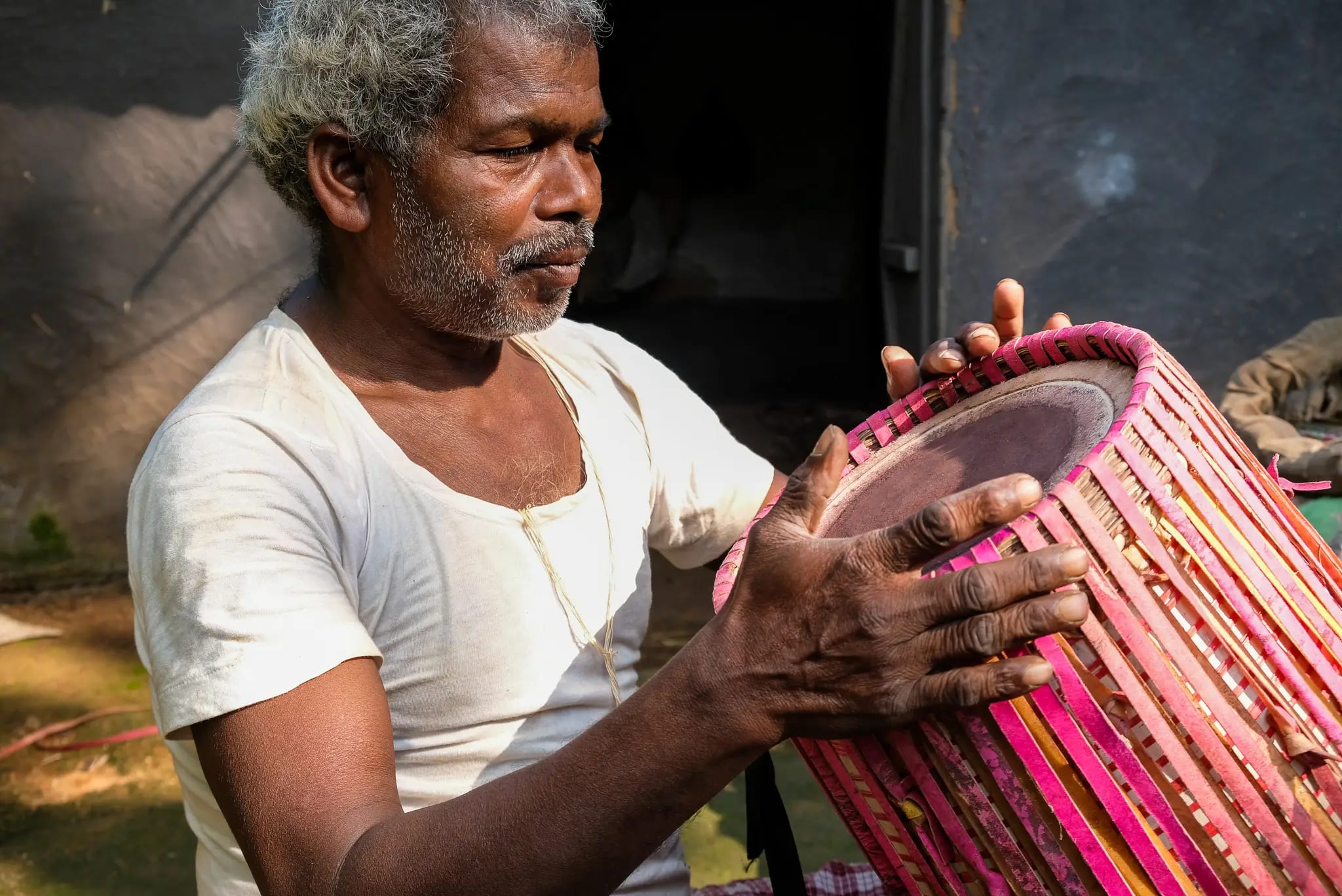
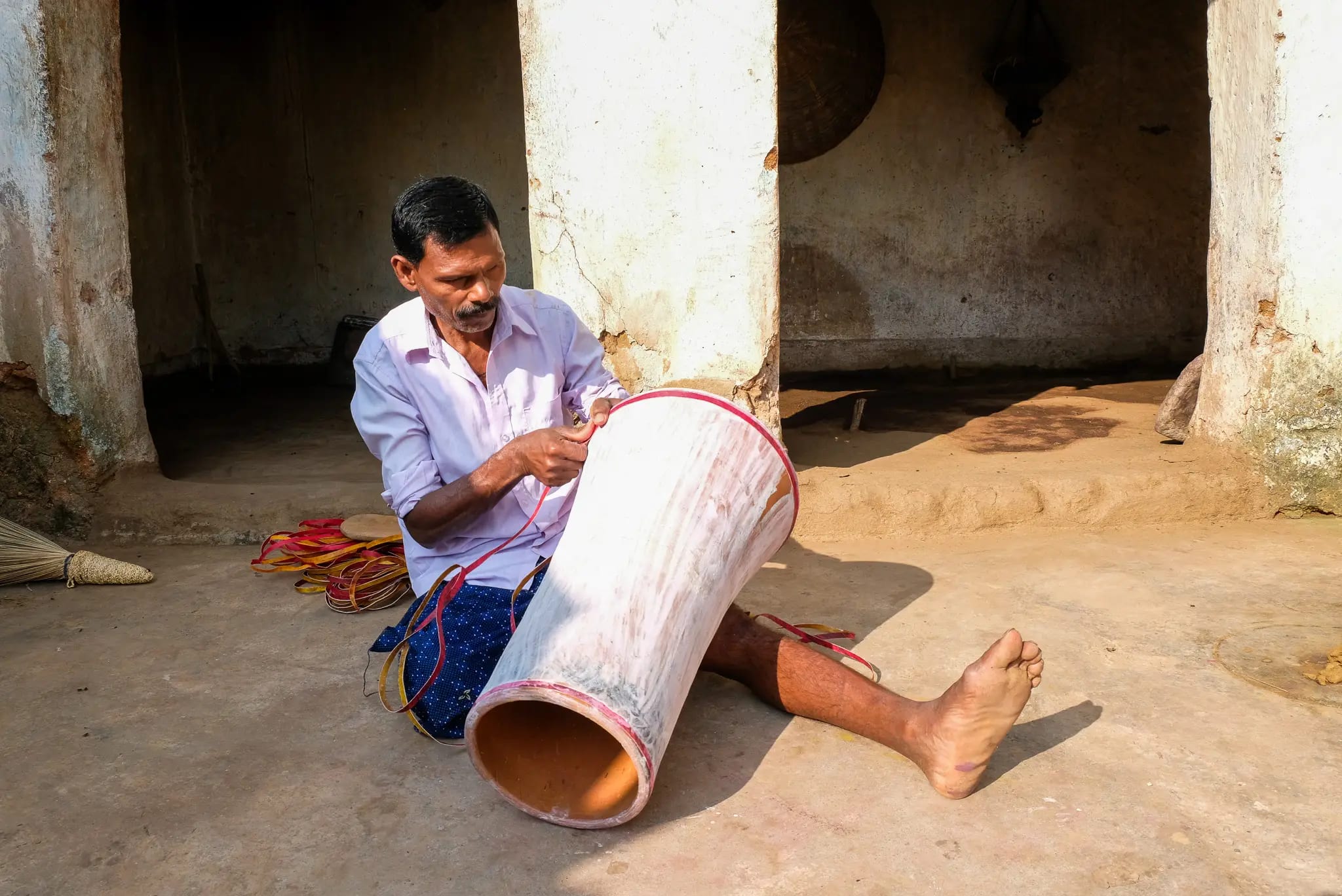
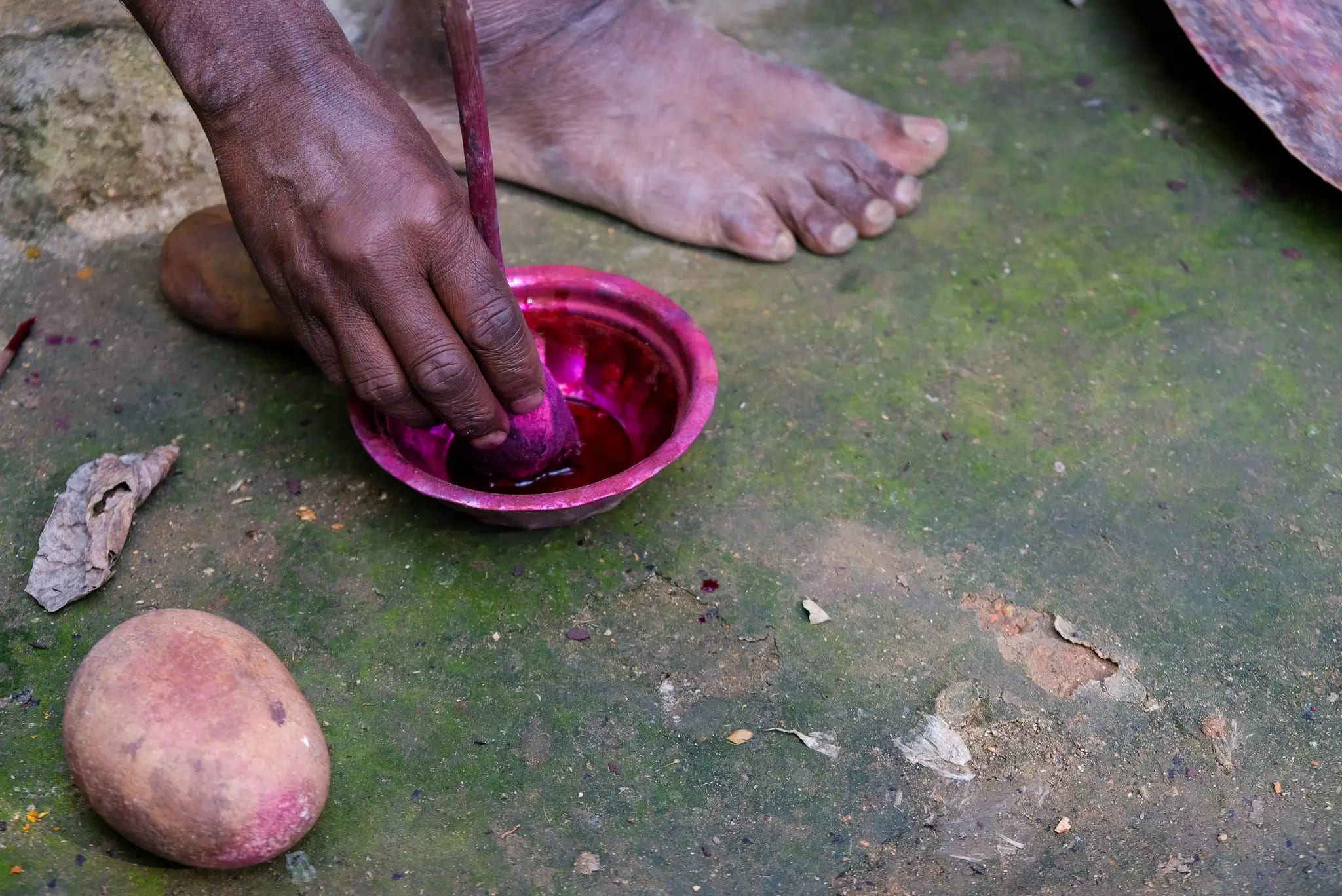
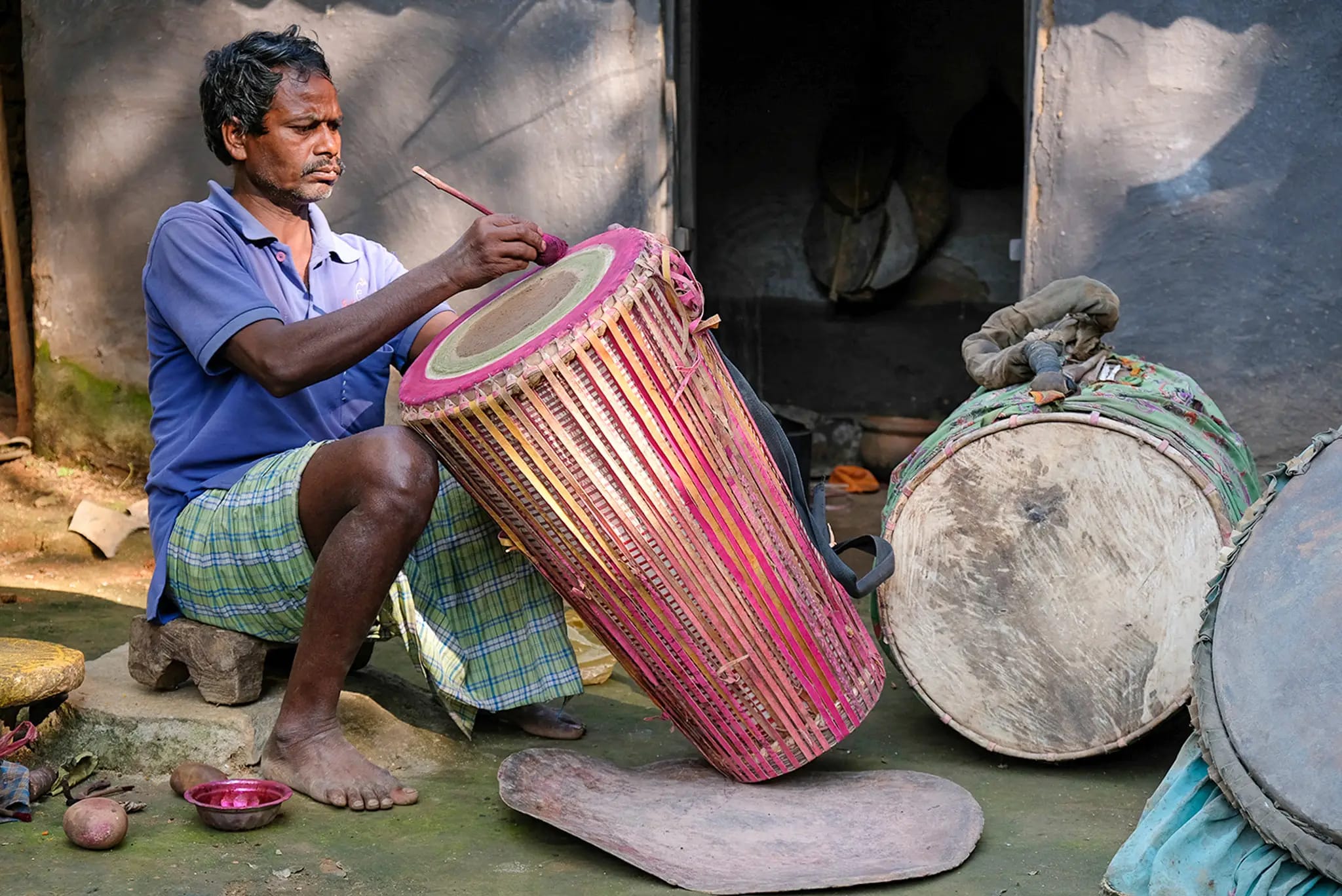
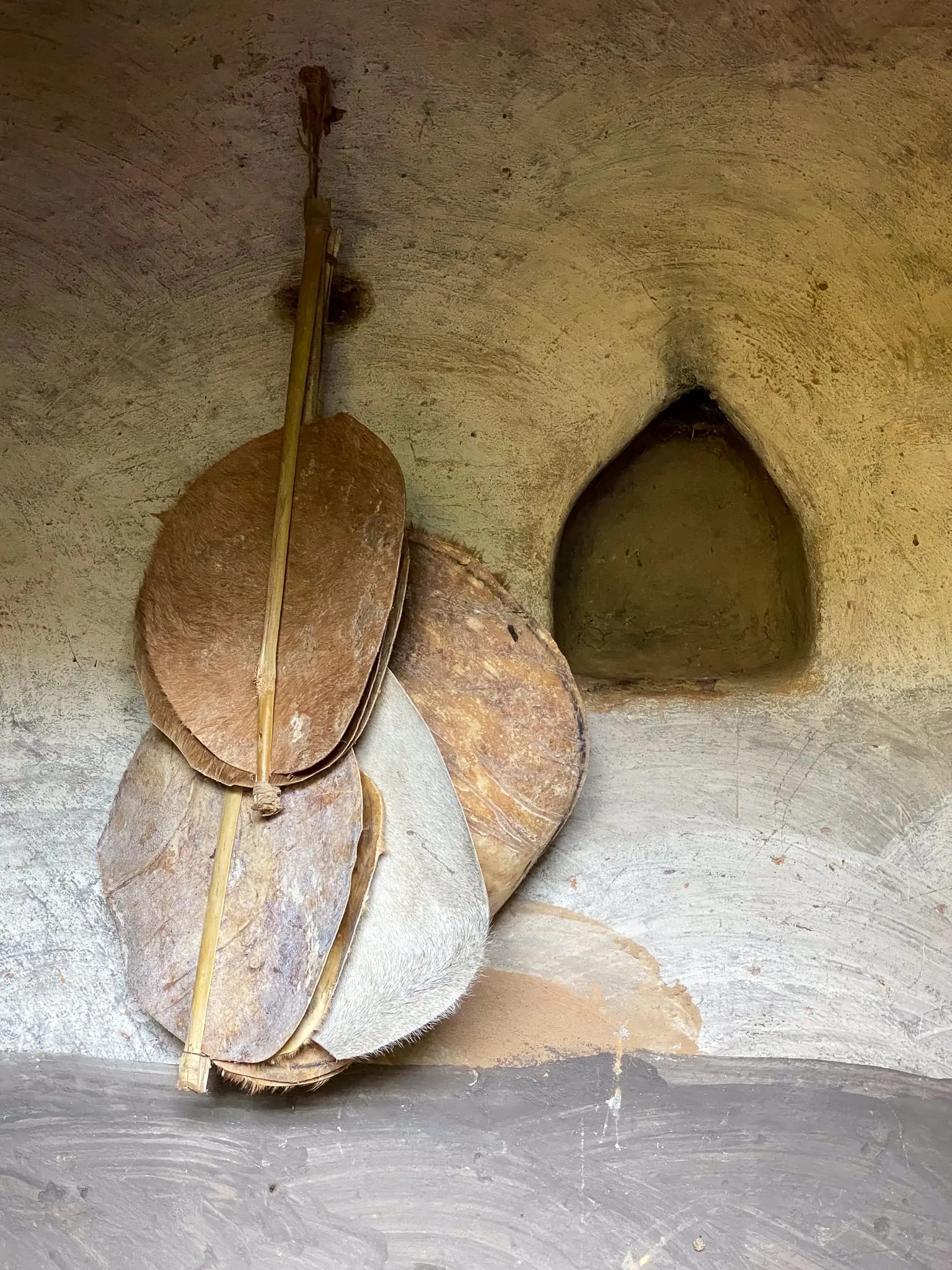
Suda Naik sits tuning a drum while another community member paints colours along the leather's edge. The Ghasi specialise in several types: the dholak, the nagara, the dhank, and the maandar. Each requires different materials and different techniques. Wood from the forests, clay from those three-kilometre walks, and leather acquired when animals die.
Summer kills the work. Heat makes clay uncooperative, impossible to shape properly for the drum's requirements. "We try to extend the work till March," Deepak says. "After that it's not possible due to the heat." Those lean months mean finding daily wage work in nearby towns. But the drums always pull them back.
THE GHASI COMMUNITY
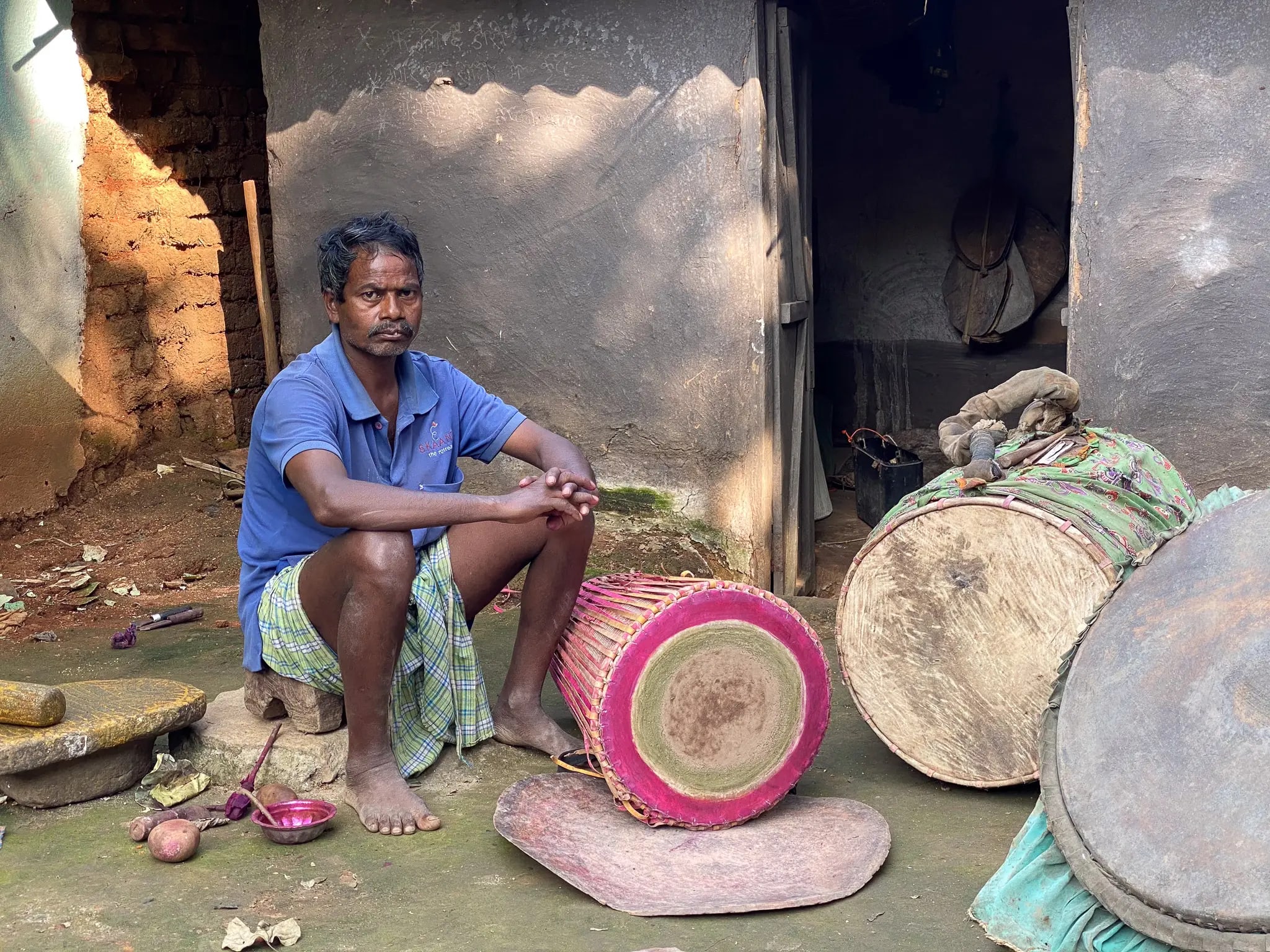
The Ghasi community in Tintanga has made drums for generations. Twenty to twenty-five families live here, from children to people in their seventies, all connected to this craft. After the monsoon each year, they collect clay and begin the season's work. Drums sell for 2,000 to 3,000 rupees depending on size.
03
TUNING BY EAR
"This is our ancestral job," Suda says. Not defensive, just stating a fact. The forests matter to them in practical and spiritual ways. Wood for drum frames comes from there. They worship the trees, understanding the relationship isn't just extractive.
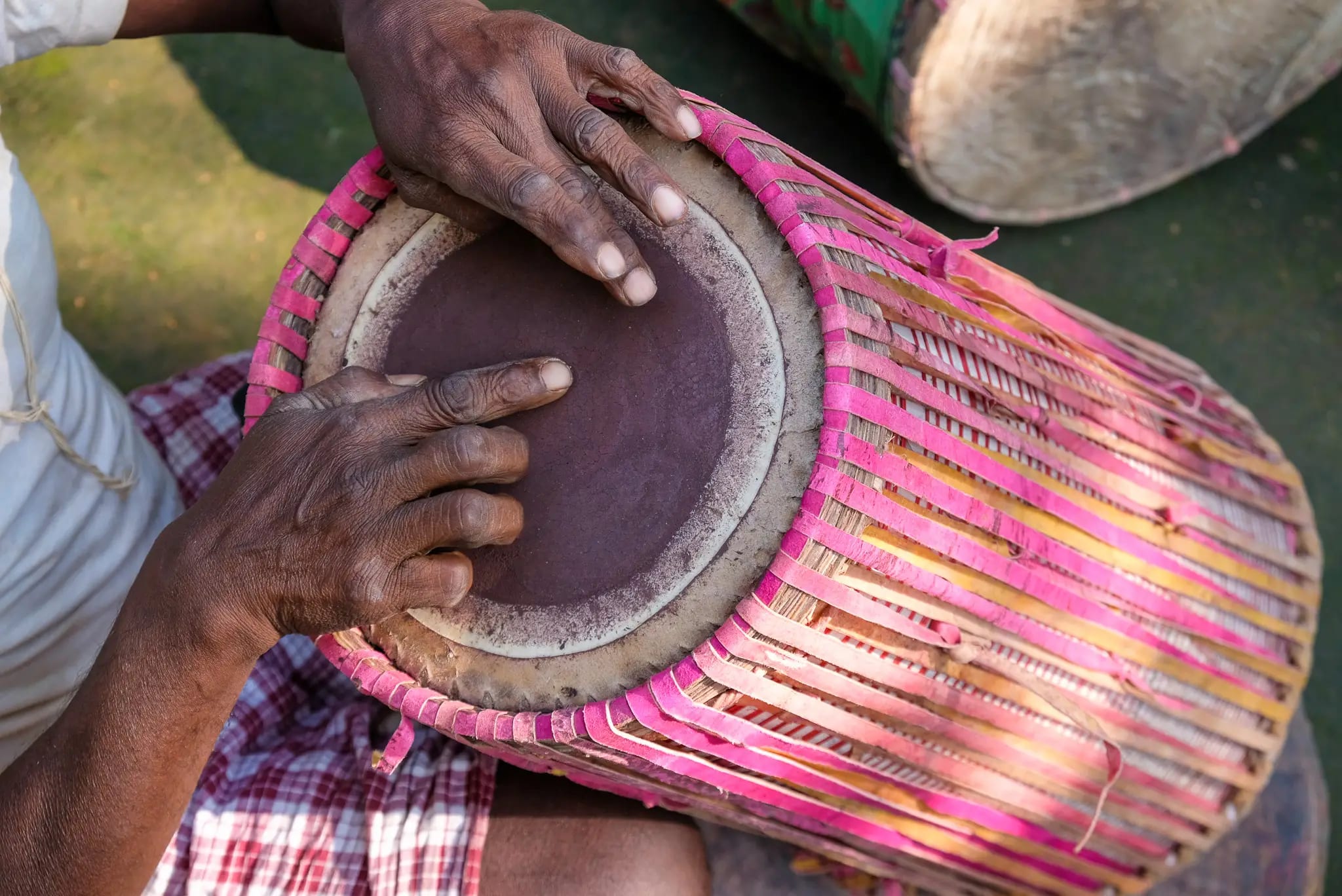
Tuning is where skill shows most clearly. Suda explains three specific actions: fitting the leather to the structure and determining how tight to pull it, rubbing or adjusting the leather until the sound emerges correctly, and beating the frame itself to affect the instrument's voice. It's not scientific exactly; it's more like coaxing out what's already there, waiting.
04
THIN PROFIT
A dhank brings in 7,000 to 8,000 rupees. A nagara fetches 6,000 to 7,000. Sounds decent until you account for materials, time, and the haggling that happens with every sale. Most customers are from the Oraon tribes, buying drums for marriages. The numbers barely cover costs. Profit is thin to nonexistent.
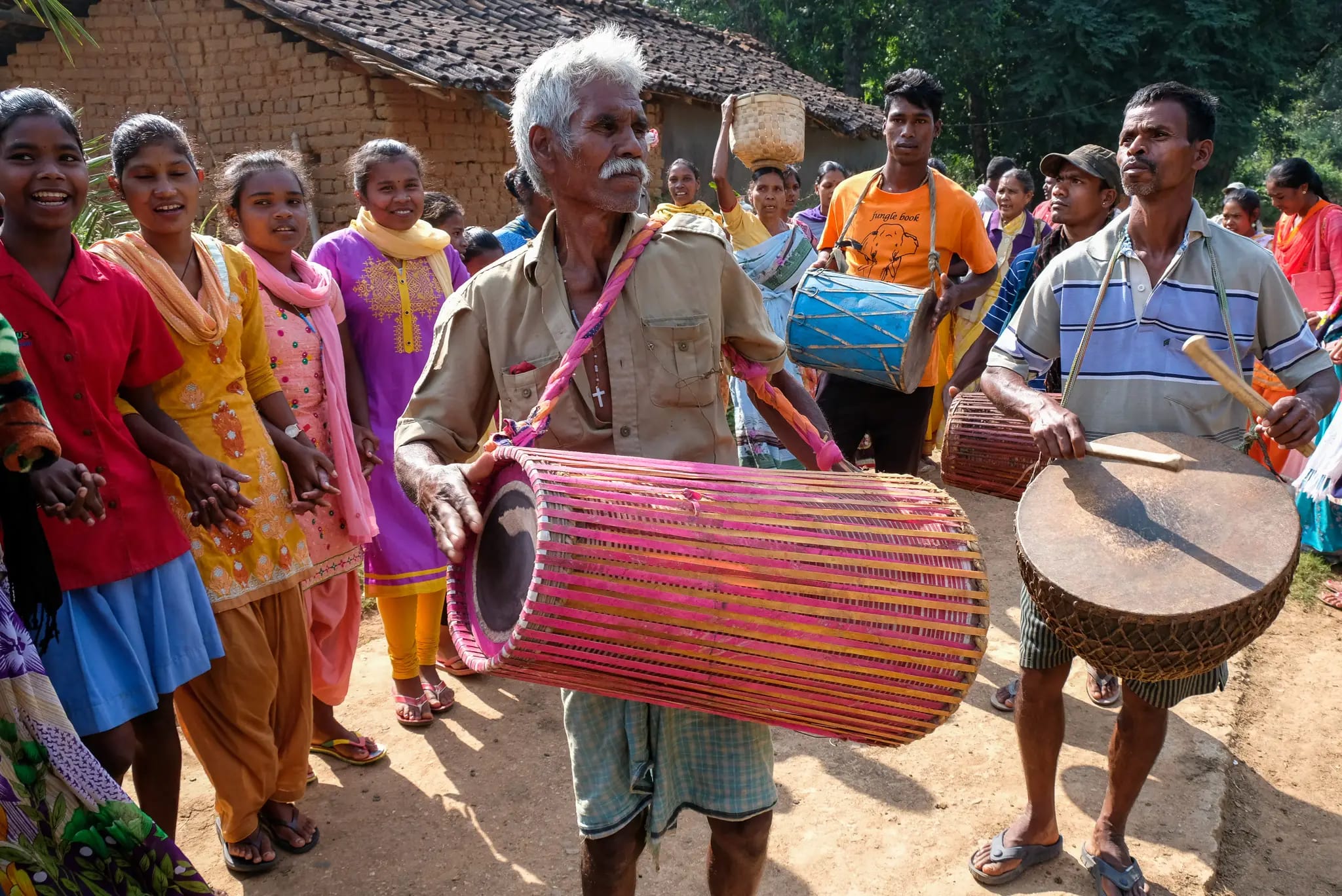
So they supplement. Weddings, functions, festivals. They play as much as they make. "This is our identity and practice too," Suda says. "For sustainability we accept the invitation to marriages and similar functions, as the production and sale of these instruments is not sufficient."
05
CONTINUOUS ENGAGEMENT
The craft itself doesn't die easily, even when economics argues against it. Skills pass through observation, children watching parents and grandparents work, absorbing techniques before they're old enough to articulate what they're learning. Suda learnt this way. His peers too. Continuous engagement, he calls it. Being around the work until your hands understand.
He mentions something interesting about tempo and tone. They vary by caste and community, the groups who play the drums. The Ghasi make instruments for different musical traditions, each requiring subtle adjustments in construction. A drum for one community won't sound quite right for another. The makers have to know these distinctions.
06
THE MUSIC PLAYS ON
Factory drums from cities undercut them on price. Wood and plastic are mass-produced and cheaper. The Ghasi can't compete on cost. Their advantage, if you can call it that, is specificity. Traditional forms, sounds that plastic can't replicate. But that's a shrinking market.
Still, Suda thinks the younger generation will continue. He's watched them watch the elders, seen them pick up tools and try. The pride runs deep enough to withstand economic pressure, at least for now. "They will do justice to the identity," he says, and he seems to believe it.