Duck Pastoralists of the Paddy Fields
Location:East Godavari, Andhra Pradesh
16.9174° N, 82.1061° ECamera -
01
Where Harvested Paddy Fields Become Temporary Homes For Nomadic Duck Herders Seeking Water Work Together Season After Harvest
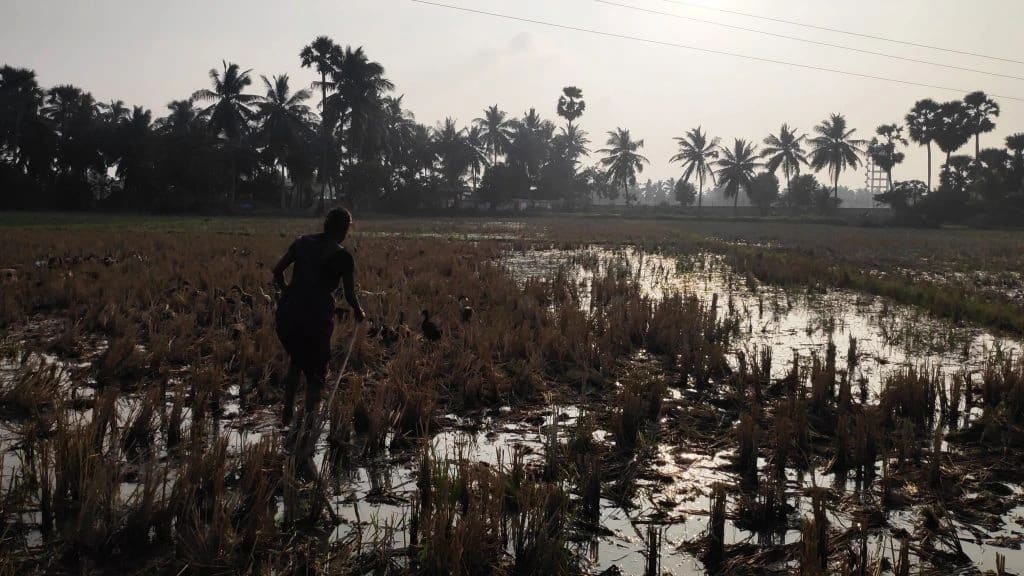
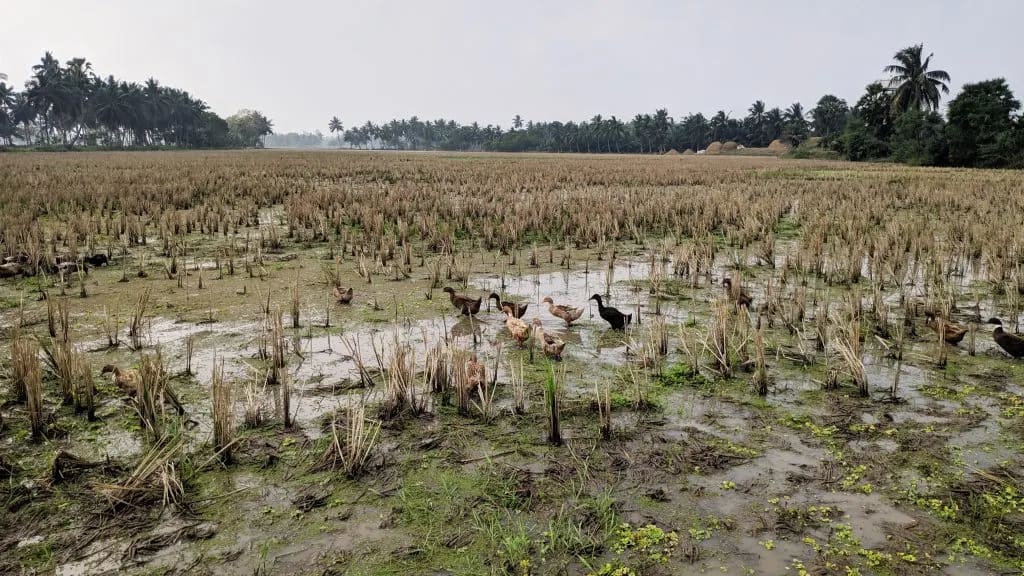
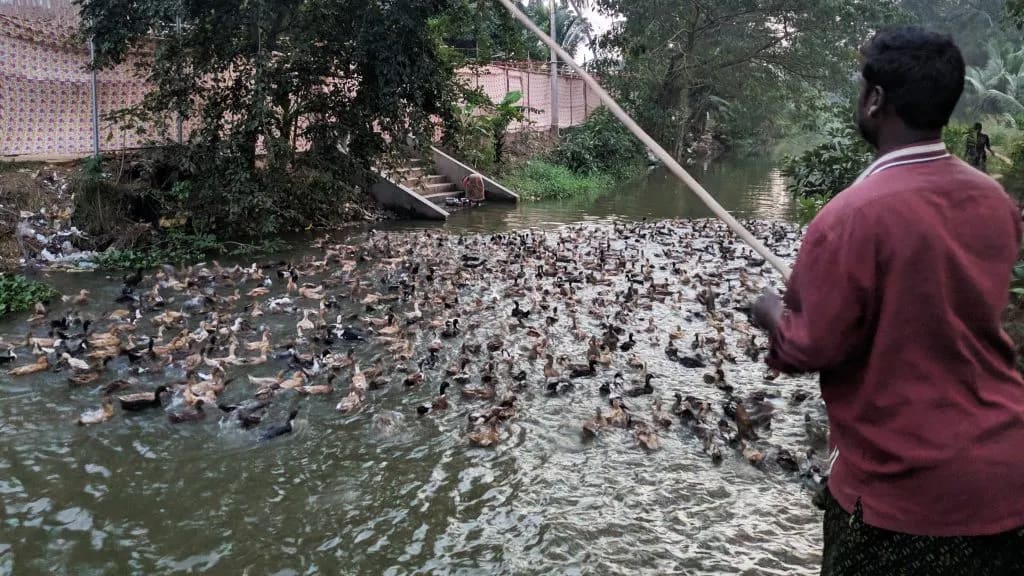
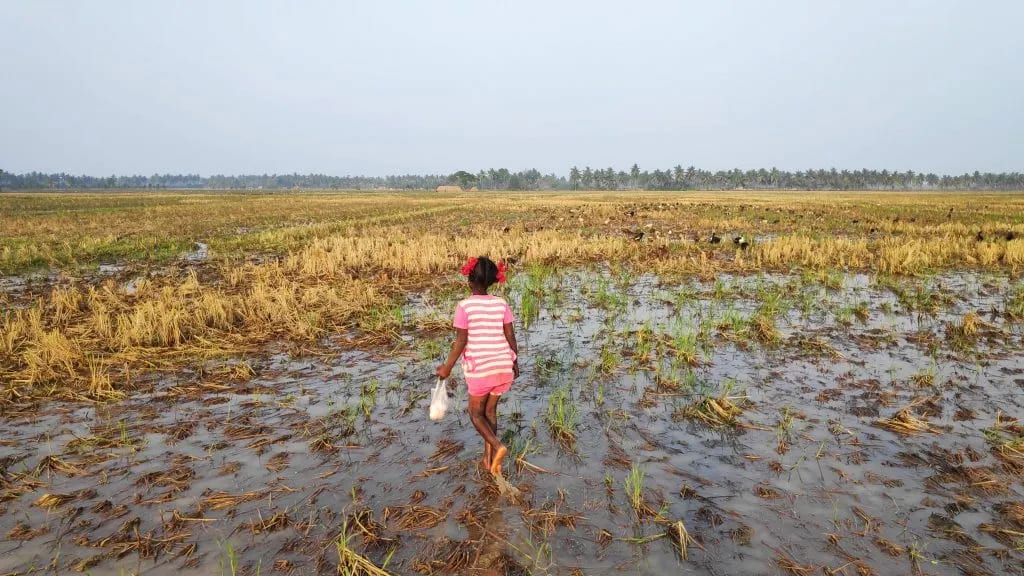
The harvested paddy fields of East Godavari echoed with splashing wings as hundreds of ducks spread across shallow water after harvest together daily.
A young girl raced through the mud carrying a cane nearly twice her height, chasing scattered ducklings while two adults moved from opposite sides to gather the restless flock into one noisy circle before the birds finally settled down to feed in the flooded fields.
Venkat Rao and Subbamma paused briefly while their daughter Devi watched the ducks settle before another long afternoon of herding across waterlogged fields under the relentless sun together.
Their journey begins where flooded fields promise food, water, and another chance to keep moving together onward.
02
Following Water, Finding Temporary Belonging
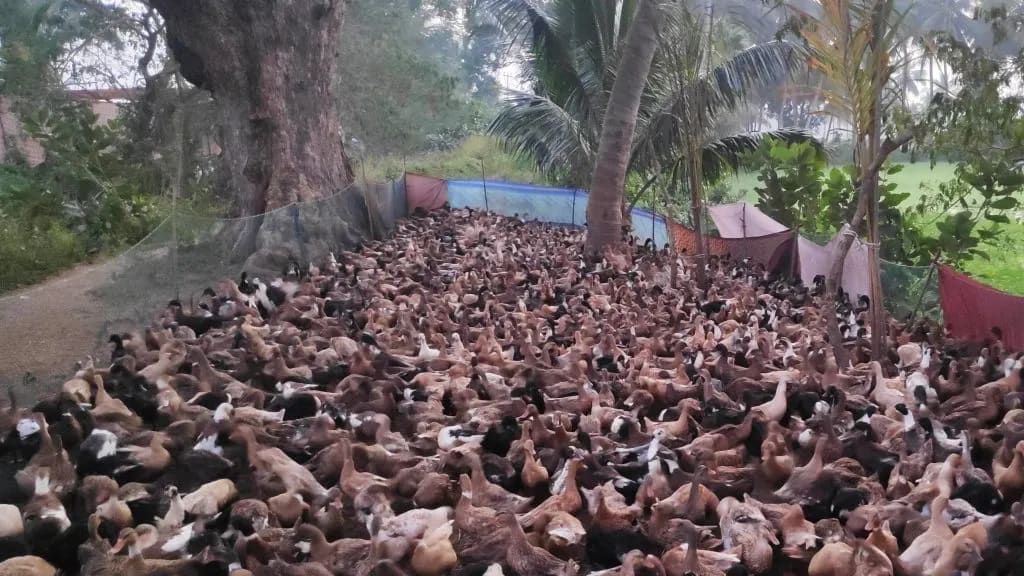
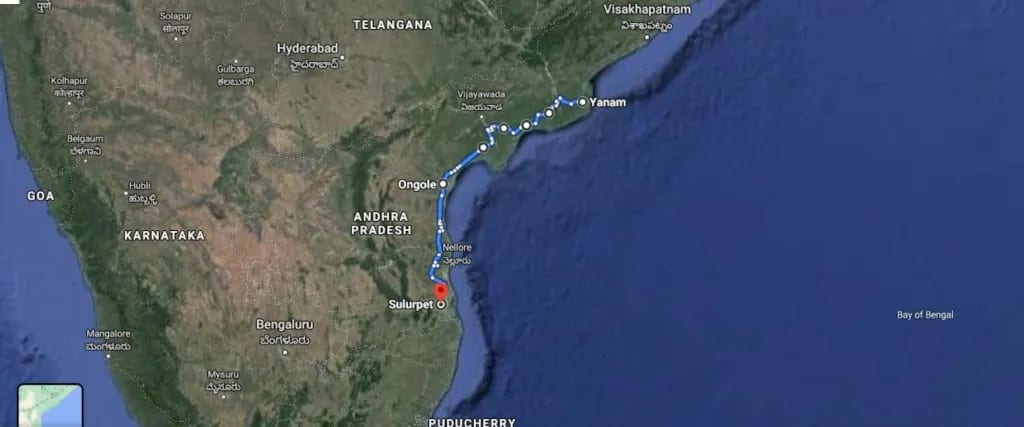
Venkat Rao, his wife Subbamma, and daughter Devi belong to the Erukula community from Ongole. Every season they travel hundreds of kilometres following harvested paddy fields where ducks can forage, feed, and thrive naturally. A full migration covers nearly 1,200 kilometres between north Tamil Nadu and Andhra Pradesh's coast. Eggs provide the family's primary income, with each duck laying around 250 annually, yet, as Venkat admits, everything rarely goes right.
The ducks consume insects, grubs, and leftover grain while naturally fertilising and aerating fields, making their arrival valuable for welcoming landowners. Behind every successful season lies uncertainty, where transportation costs, disease outbreaks, and unpredictable circumstances steadily erode already modest earnings from generations-old traditions.
03
The Heavy Cost Of Constant Migration Together
Transporting hundreds of ducks demands trucks, with drivers charging sixteen rupees per kilometre. Although expensive, road transport prevents greater losses during migration. Even then, stray dogs attack vulnerable birds, while disease remains an even larger threat to families depending entirely upon their wandering flocks. One devastating virus outbreak killed between 800 and 1,000 ducks. Later, COVID-19 lockdowns halted movement entirely, trapping the family away from home as markets closed and income disappeared almost overnight.
"Being a duck farmer is tough," Venkat says. Survival depends on the goodwill of hosting landowners and villagers. Every destination begins with unfamiliar faces before slowly becoming a place where temporary trust can grow together. Wherever they stop, simple temporary shacks become home, sheltering belongings while offering brief comfort before another inevitable journey begins again. Each migration demands resilience beyond endurance, carrying not only hundreds of ducks but generations of knowledge, uncertainty, and hope across unfamiliar landscapes every season.
04
The Heavy Cost Of Constant Migration Together
Transporting hundreds of ducks demands trucks, with drivers charging sixteen rupees per kilometre. Although expensive, road transport prevents greater losses during migration. Even then, stray dogs attack vulnerable birds, while disease remains an even larger threat to families depending entirely upon their wandering flocks.
One devastating virus outbreak killed between 800 and 1,000 ducks. Later, COVID-19 lockdowns halted movement, trapping the family as markets closed and income disappeared. "Being a duck farmer is tough," Venkat says. "We lead a rough lifestyle, and our survival depends on the wishes and whims of hosting landowners and villagers."
Every destination begins with unfamiliar faces before trust slowly develops. The family builds temporary shacks for shelter, storing belongings while adapting to each new village. Every migration demands resilience, carrying generations of knowledge, uncertainty, and hope across unfamiliar landscapes before the journey begins once again.
05
Before Sunrise Their Daily Routine Begins Across Flooded Fields Sustaining Family Traditions Together
Before sunrise, breakfast is prepared and lunch packed before the ducks are guided into harvested paddy fields by seven each morning. The family spends the entire day watching the flock, remaining alert until dusk as the birds forage through shallow water and muddy fields.
Despite careful counting, the morning and evening totals rarely match. Ducks disappear to stray dogs, predators, or vehicles while crossing roads. As outsiders, the family has little power to question losses or unfair treatment from local communities.
Veterinary care remains scarce, with no vaccines made specifically for ducks. Instead, the family buys chicken vaccines and administers them independently, relying on practical experience gained through years of migration.