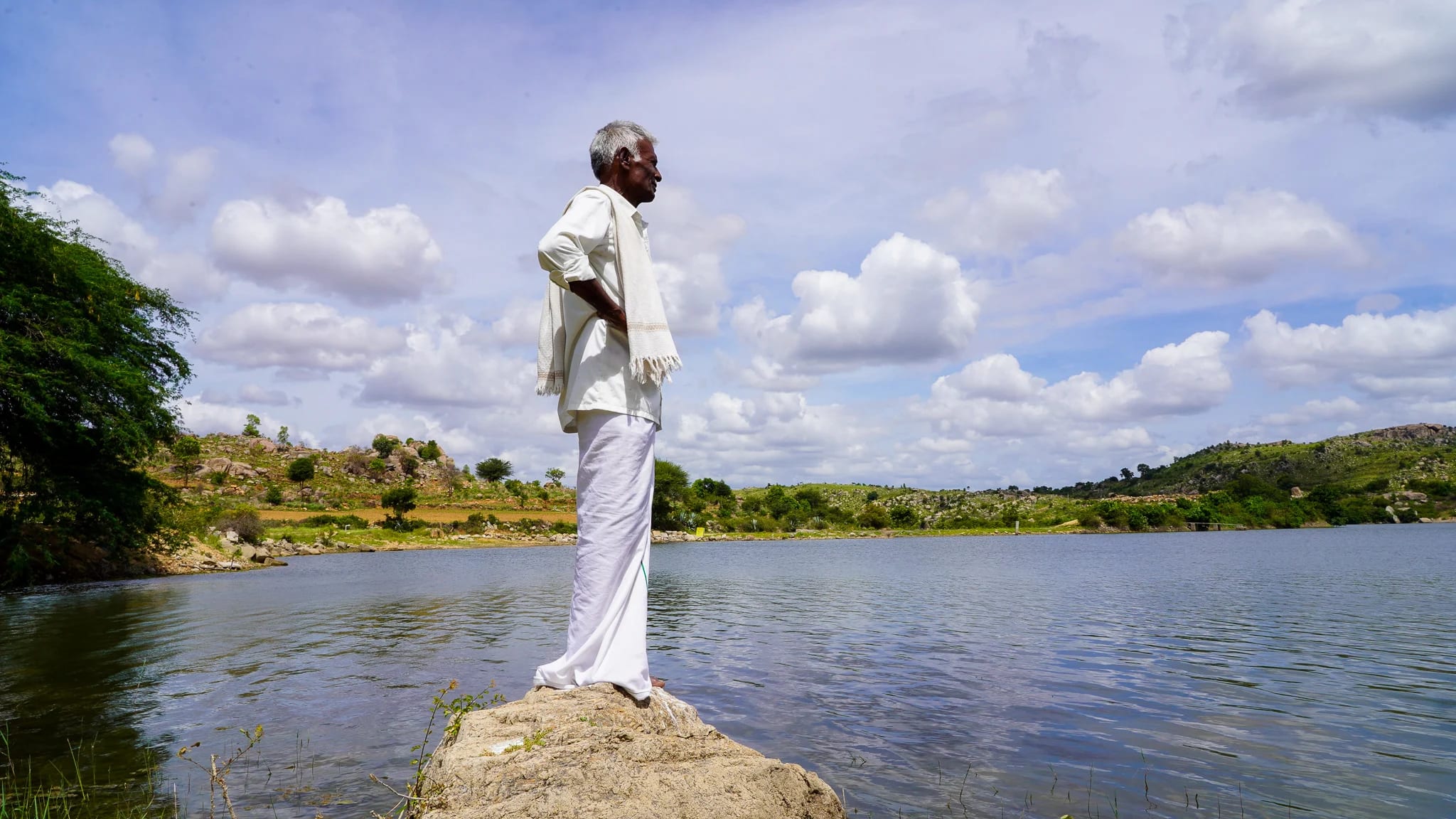
Neeruganti, Keepers of Tanks
Location:Neeruganti, Karnataka
59.3392 * N, 19.0789 * E Camera -Iphone 17 Pro Max
01
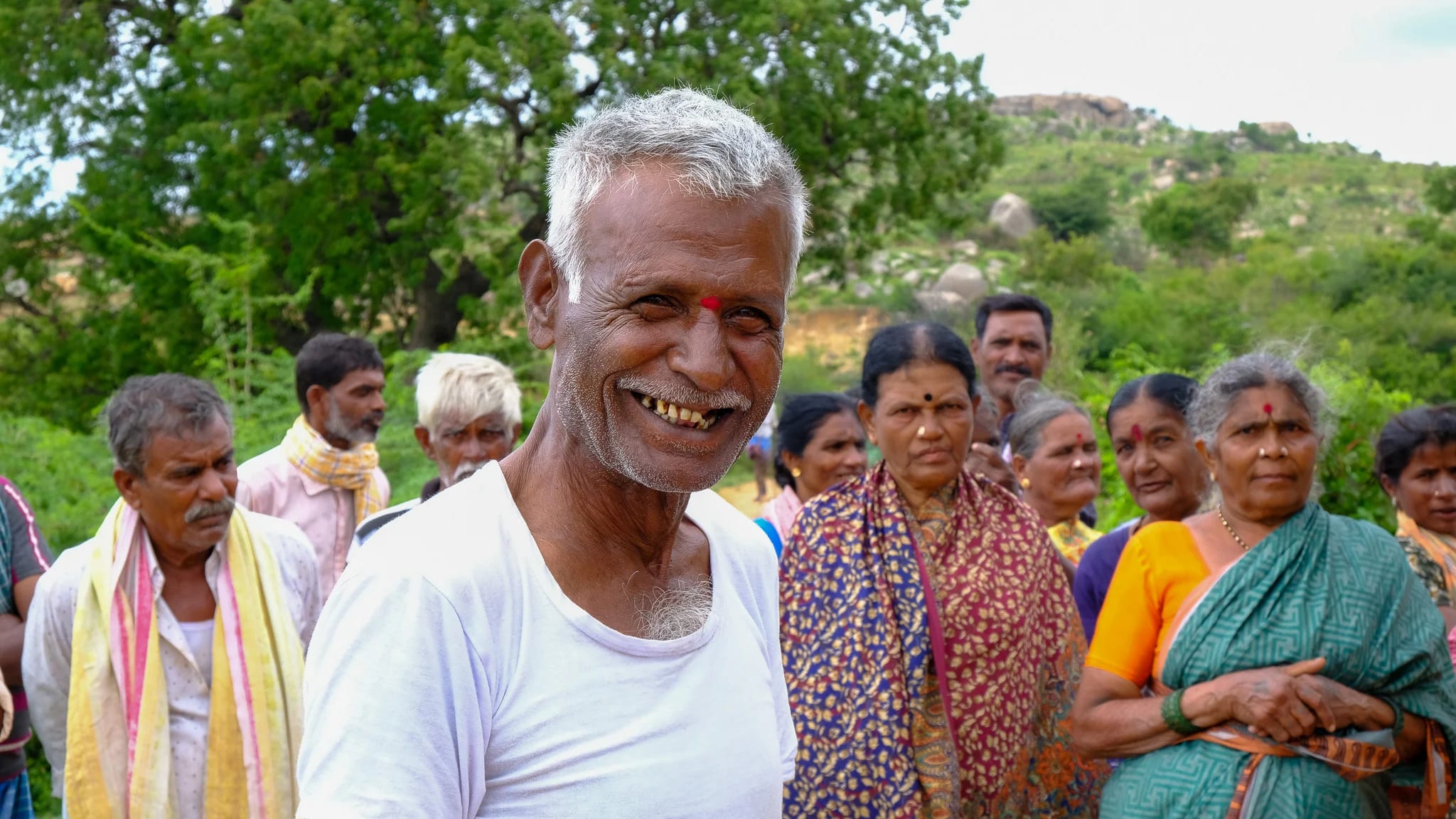
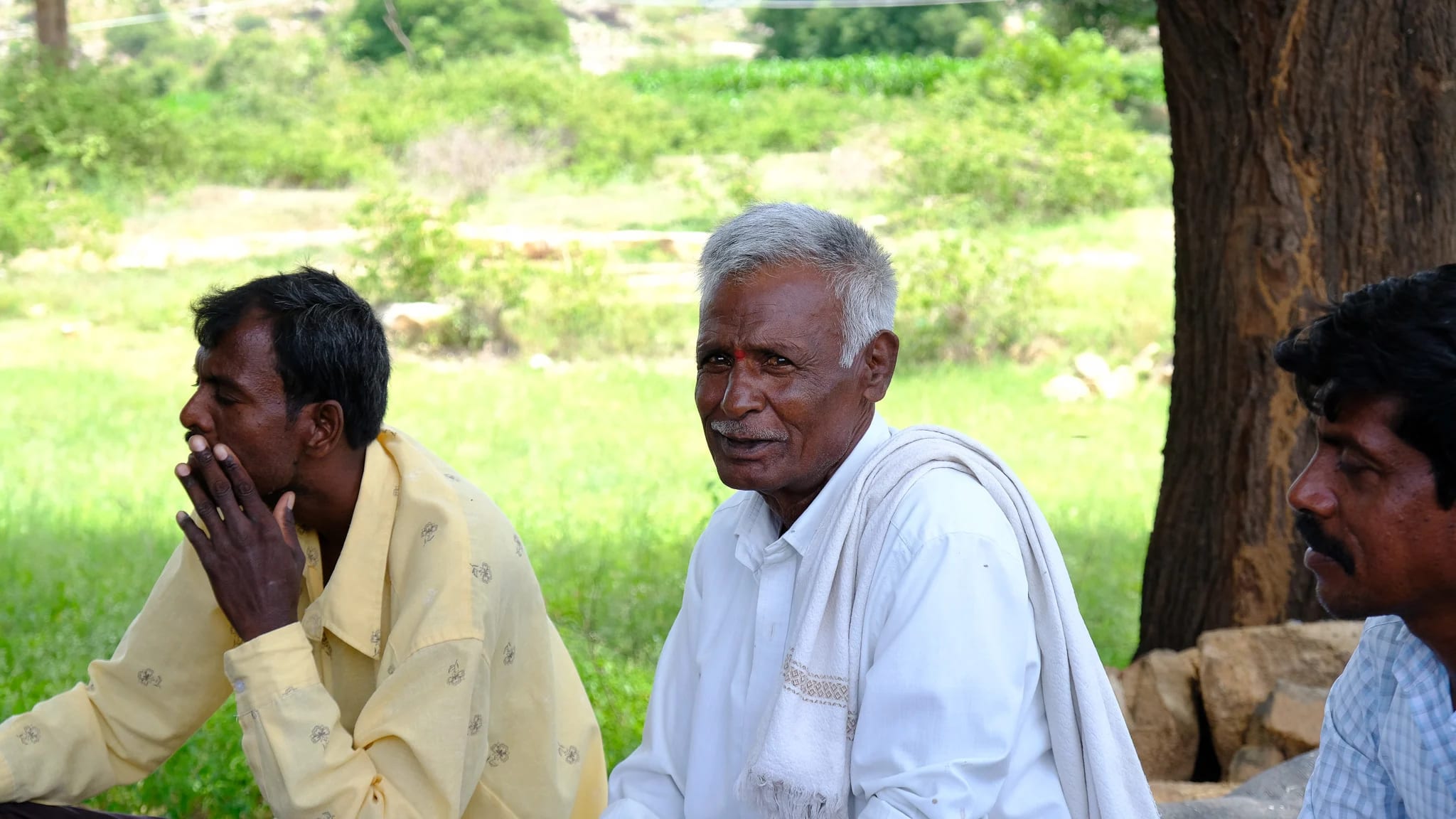
Venkatappa, 70
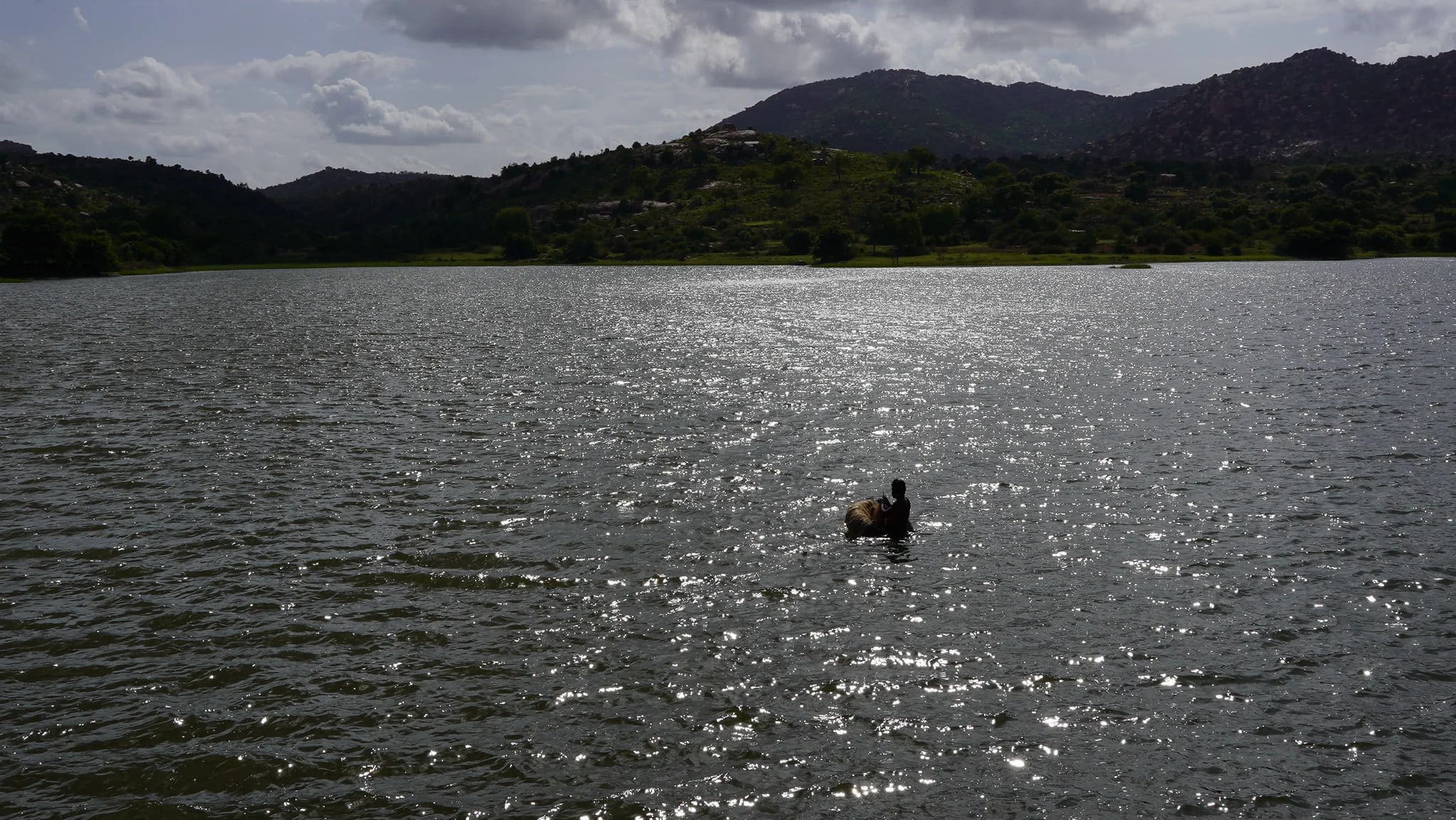
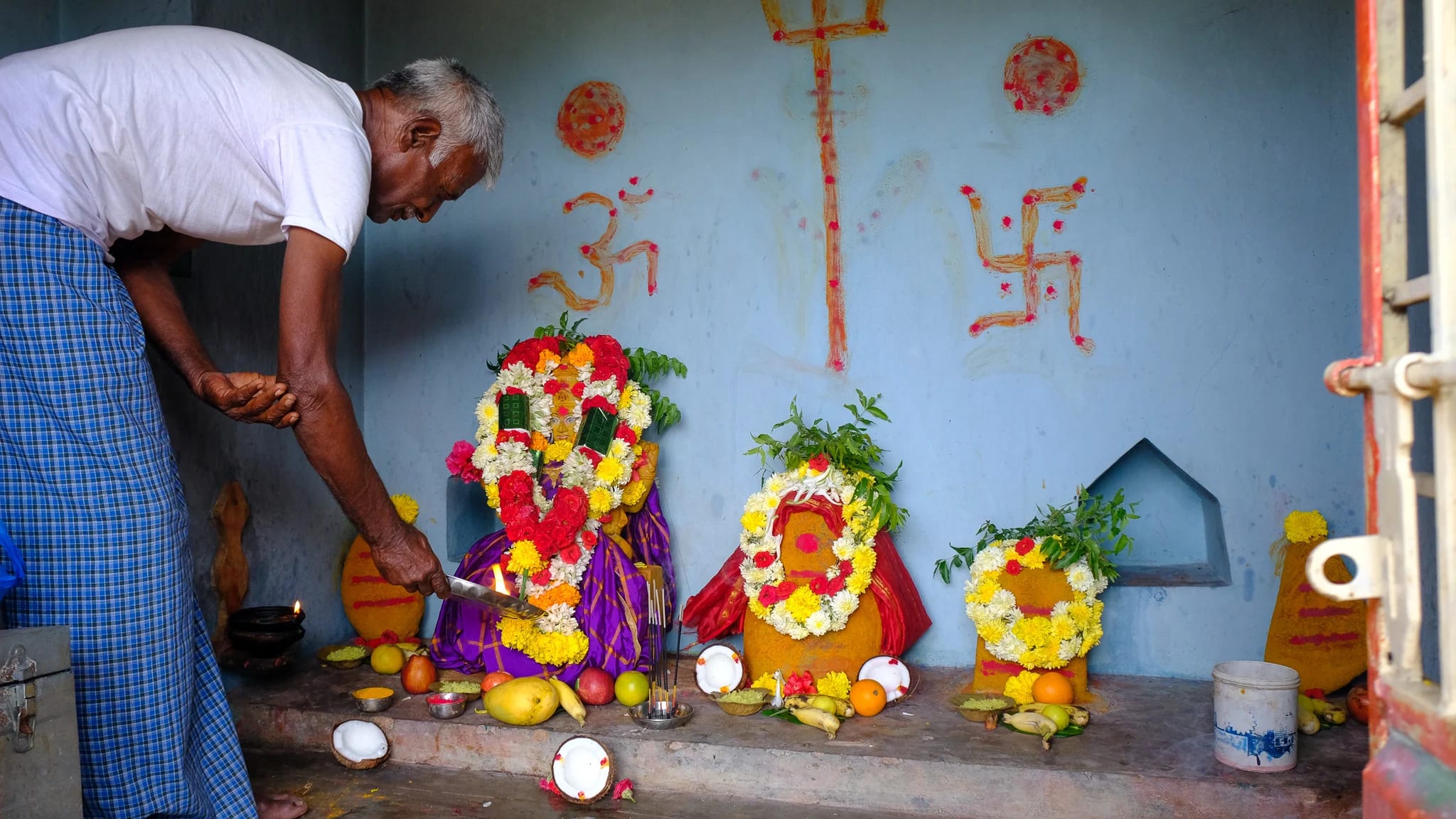
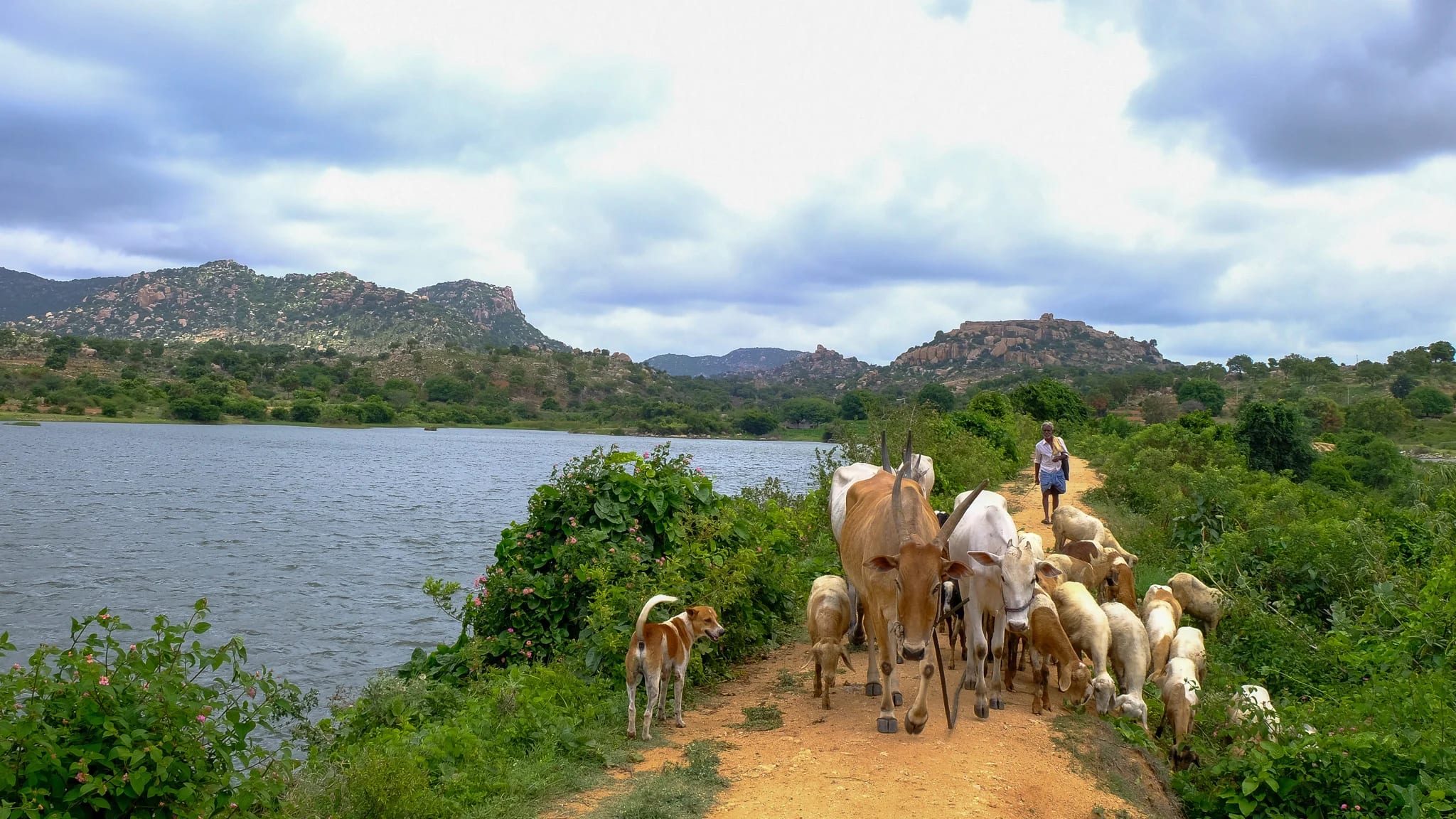
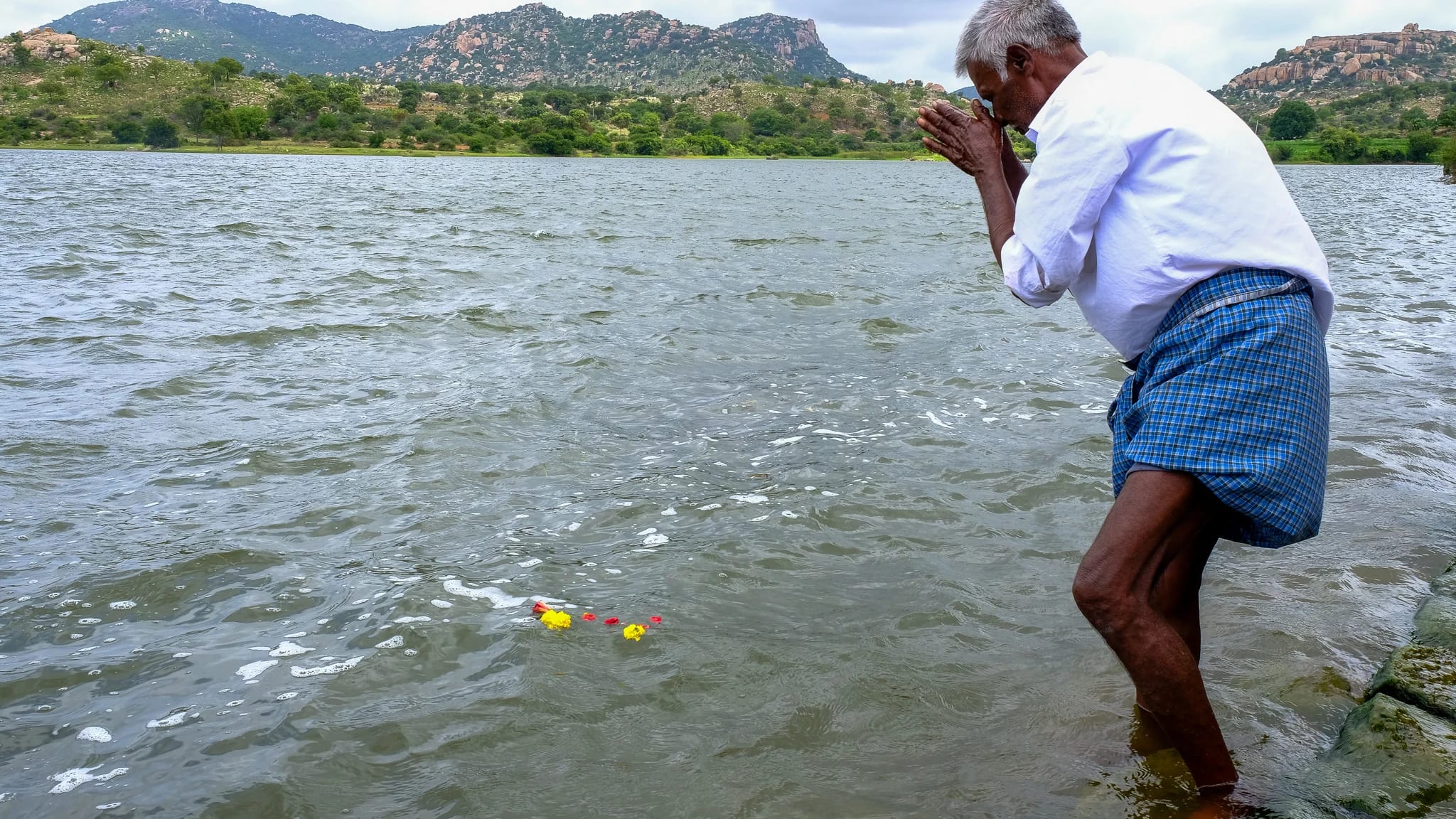
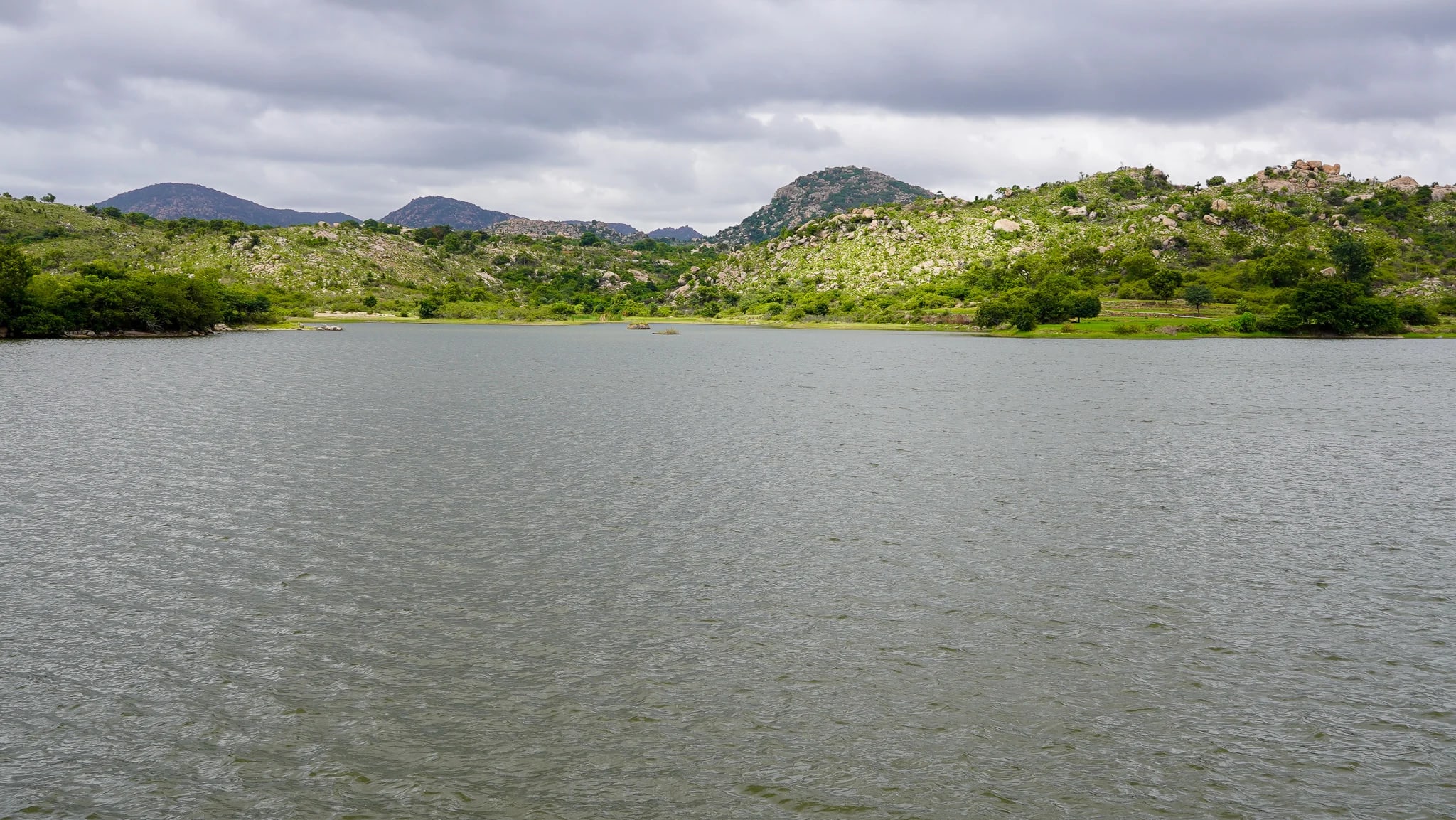
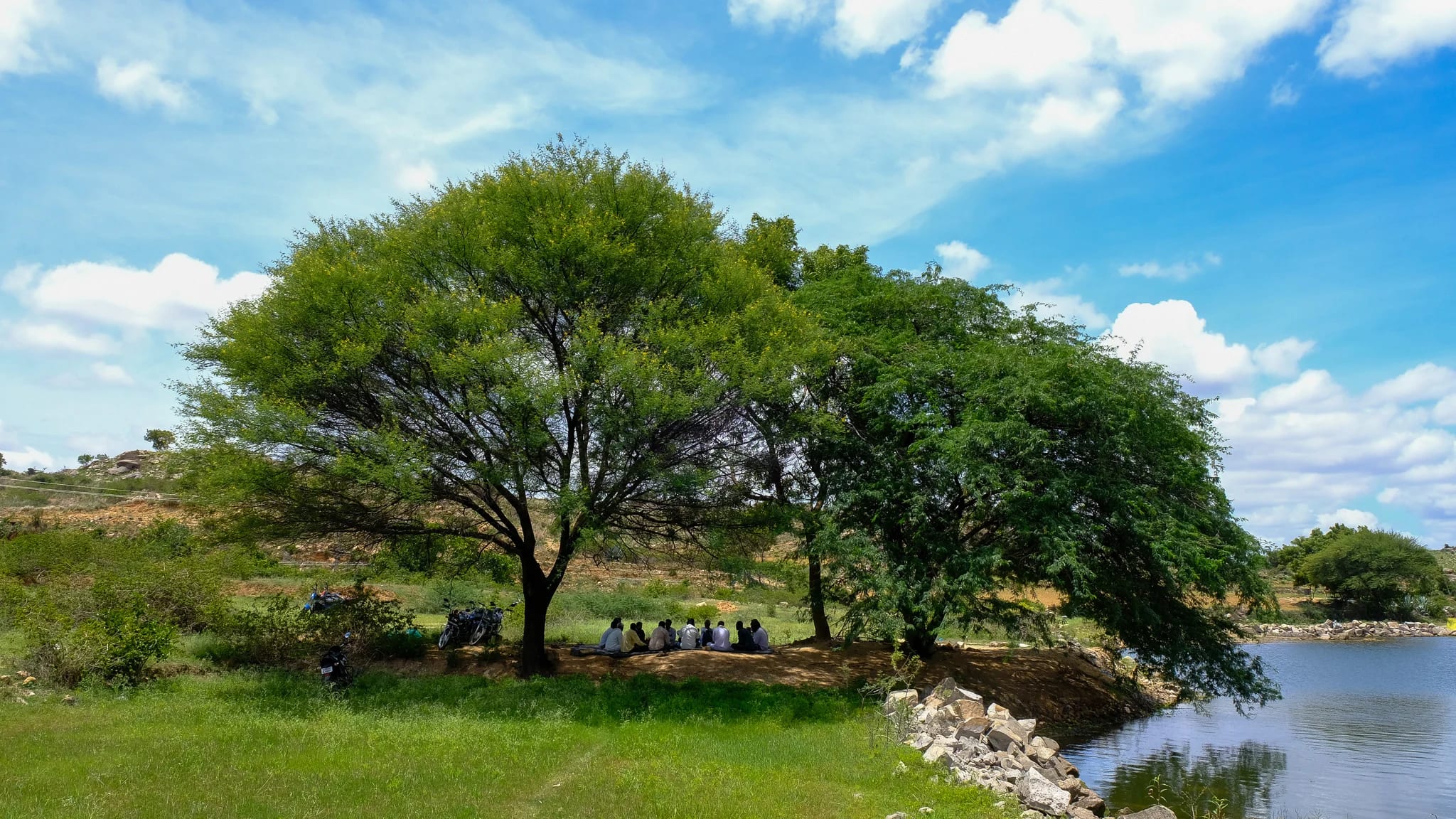
still walks to Doddammanna Kere every Tuesday and Friday.
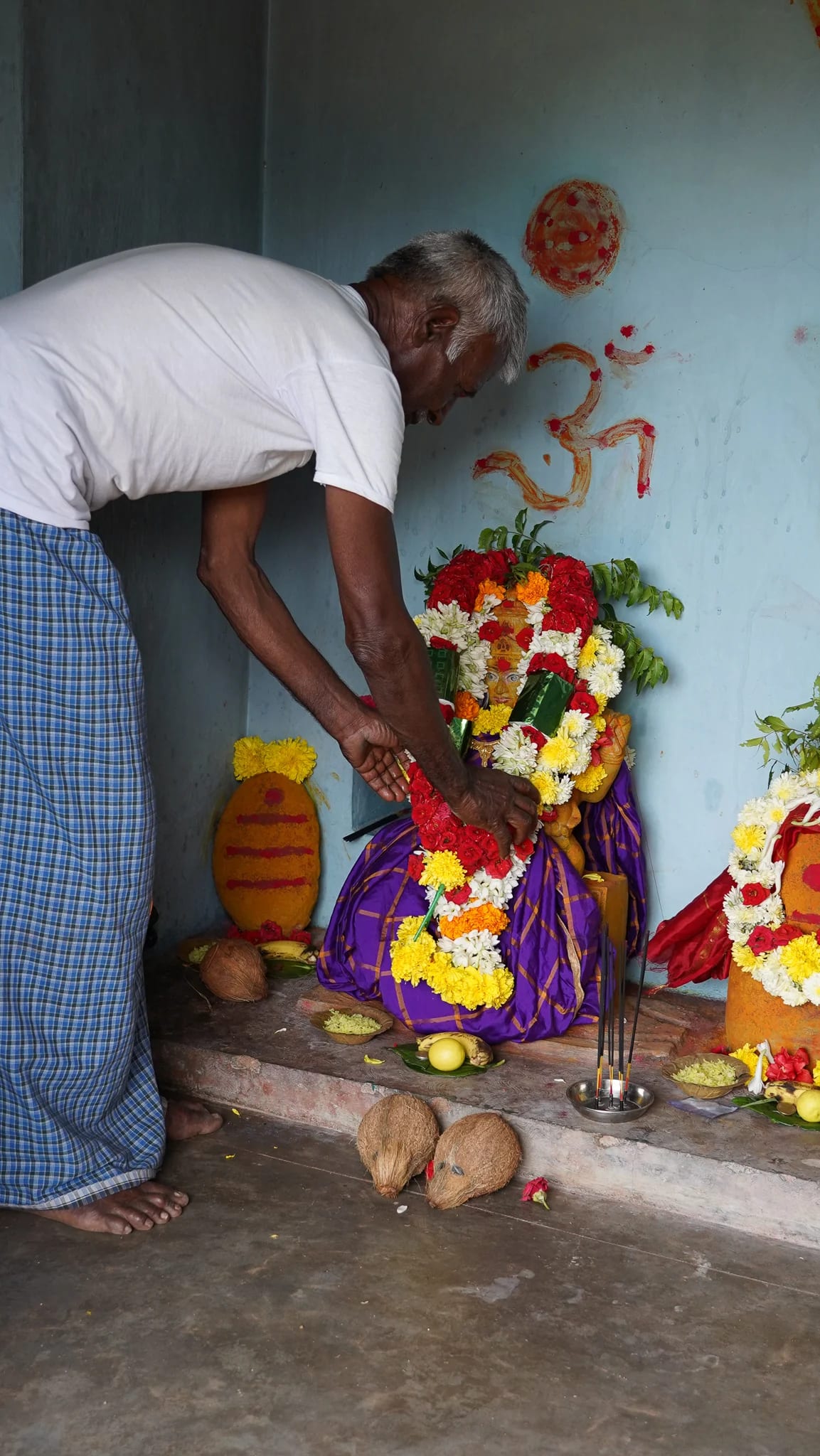
The tank was sealed years ago, but he prays to Gangamma anyway, the goddess of the lake, home deity of the Neeruganti family.
She protects us all, he says
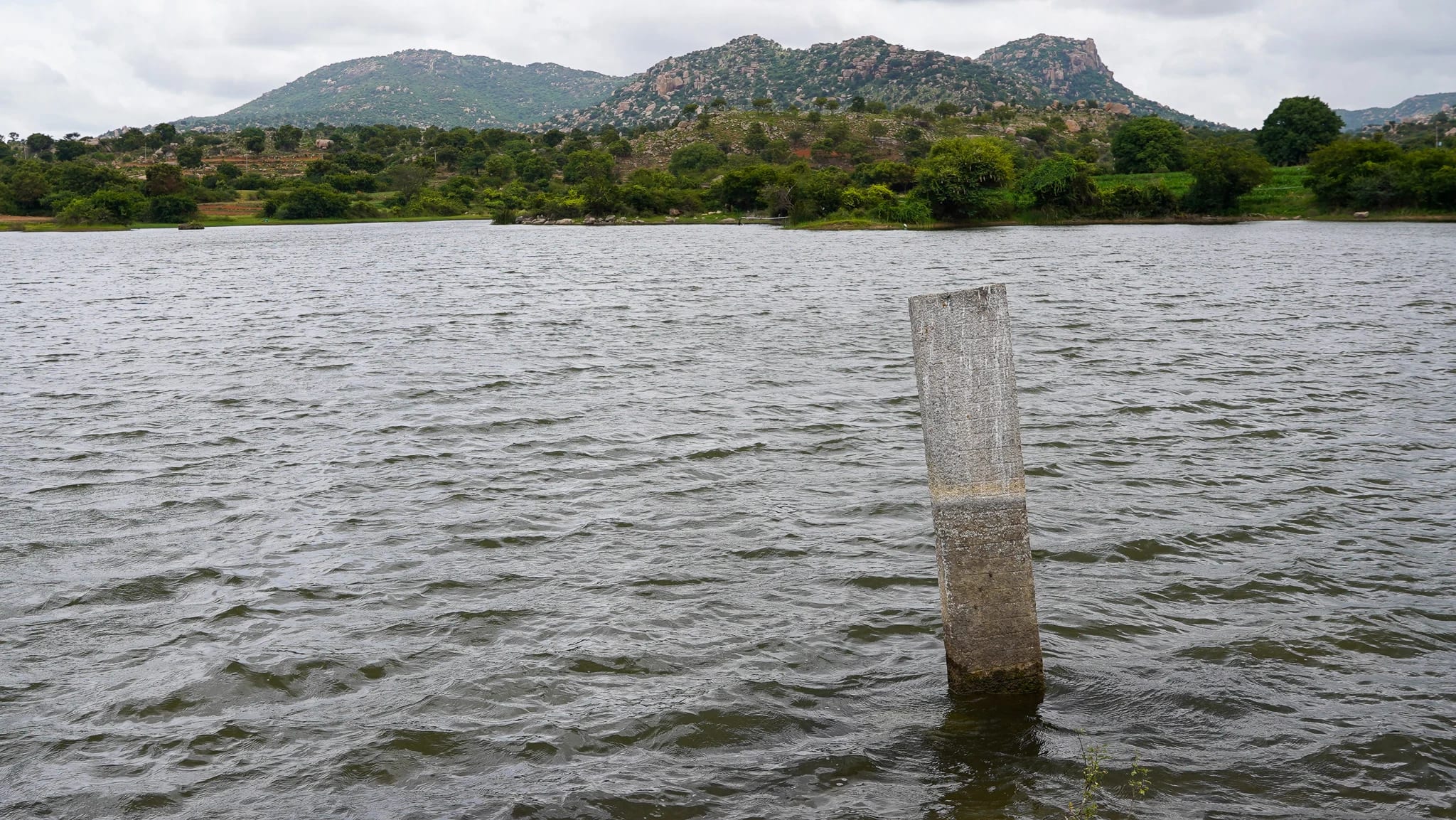
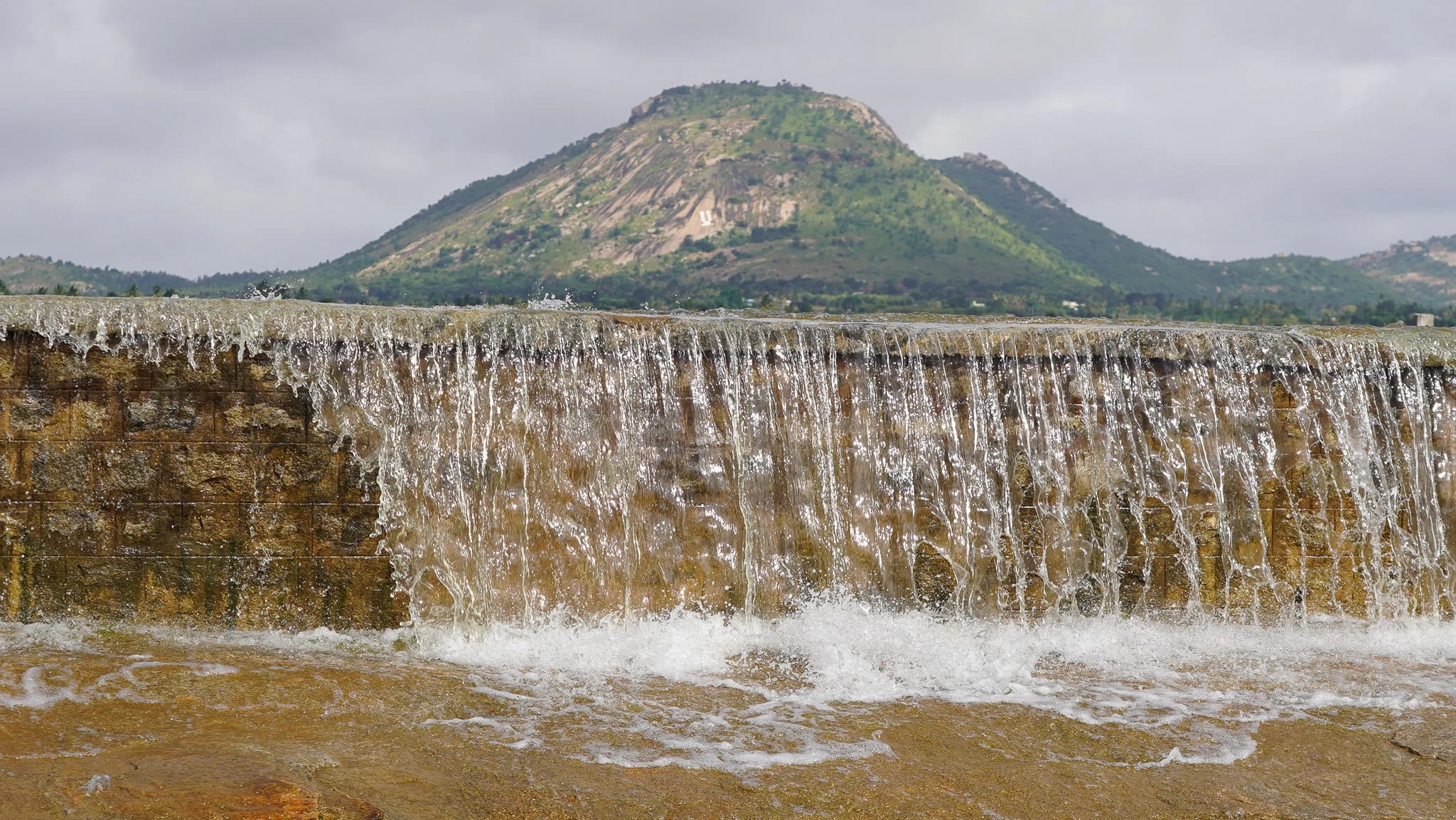
When the tank was full, we would stay in the temple and keep watch for 10 to 15 days. Now the sluice gates are locked by government order, and the water sits stagnant.
02
In the past, water was used judicially. Farmers united about sharing. We saved water for livestock to drink. Released more to higher areas, less to lower areas depending on topography and proximity to the lake. Even if the water level was very low, we made sure all farmers still received water.
This is what Venkatappa knows. How to read the tank, judge water levels, and advise on crops. Based on rainfall, he would tell farmers what to cultivate. He directed maintenance, desilting, and revegetation at bunds to reduce erosion and feeder channel upkeep.
If there is no control by the Neeruganti, there will be no water in the tank and no crop for the farmers.
He is Neeruganti.
Tank manager.
His family has held this position for generations, an unbroken line stretching back to the Vijayanagara Empire. Since water management was key, the profession came into being. Water is always a community resource, accessible to everyone. The Neeruganti regulated flow ensured no mismanagement.
03
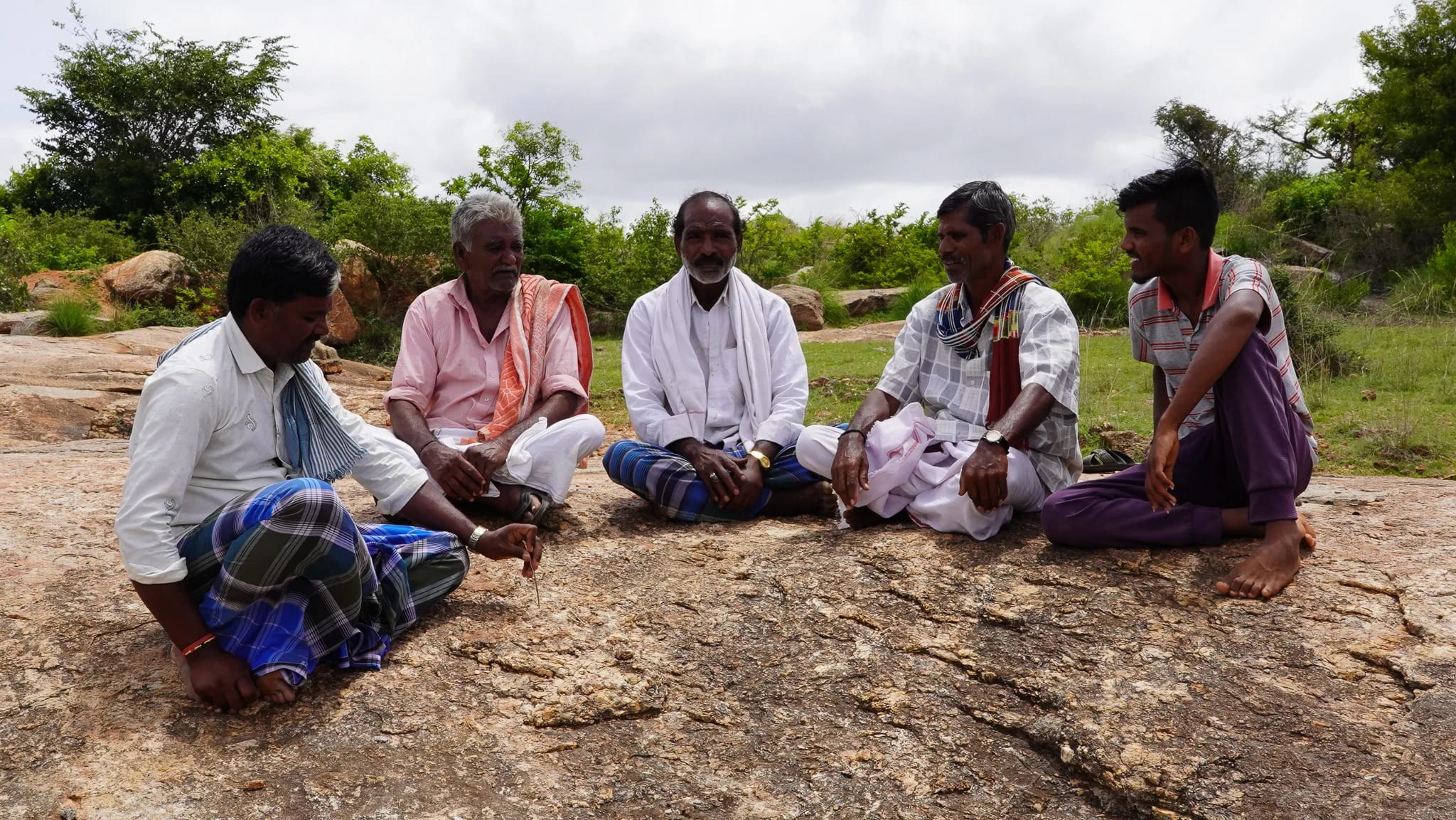
RAMESH, 41, THE NEERUGANTI OF DHANAMITTENAHALLI, SAYS IT PLAINLY.
We have many emotions attached to our tank. Our childhood is connected with this tank; we played here and learnt to swim. It has given us life and food to eat. His father, Yerrappa, taught him everything.
My grandfather taught my father; my father taught us. In turn we taught our children. But before we could pass knowledge to grandchildren, tanks were sealed. Now there is no work for Neeruganti. We have been forced into daily wage labour.
04
THE SEALING HAPPENED IN STAGES.
We have many emotions attached to our tank. Our childhood is connected with this tank; we played here and learnt to swim. It has given us life and food to eat. His father, Yerrappa, taught him everything.
My grandfather taught my father; my father taught us. In turn we taught our children. But before we could pass knowledge to grandchildren, tanks were sealed. Now there is no work for Neeruganti. We have been forced into daily wage labour.
05
FARMER CHINNA VENKATARAVANAPPA REMEMBERS WHEN IT WORKED.
When I was a child, paddy was cultivated over 100 acres of the command area. There were 80 farmers then. The Neeruganti was responsible for providing water to each farmer's land. His role was to inform everyone about the amount of water in the tank and what can be grown with the available water. People would collectively agree and decide on a date for sowing. The Neeruganti made sure water remained even after harvesting for livestock and domestic purposes.
The Neeruganti would be paid 40 munthas, about 300 kilograms of grain, for every acre of paddy cultivated. So they had an incentive to keep crops from drying, ensuring water reached equally to all plots.
06
GRADUALLY, WITH THE LOSS OF GREEN COVER IN SURROUNDING HILLS, RAINFALL DECREASED.
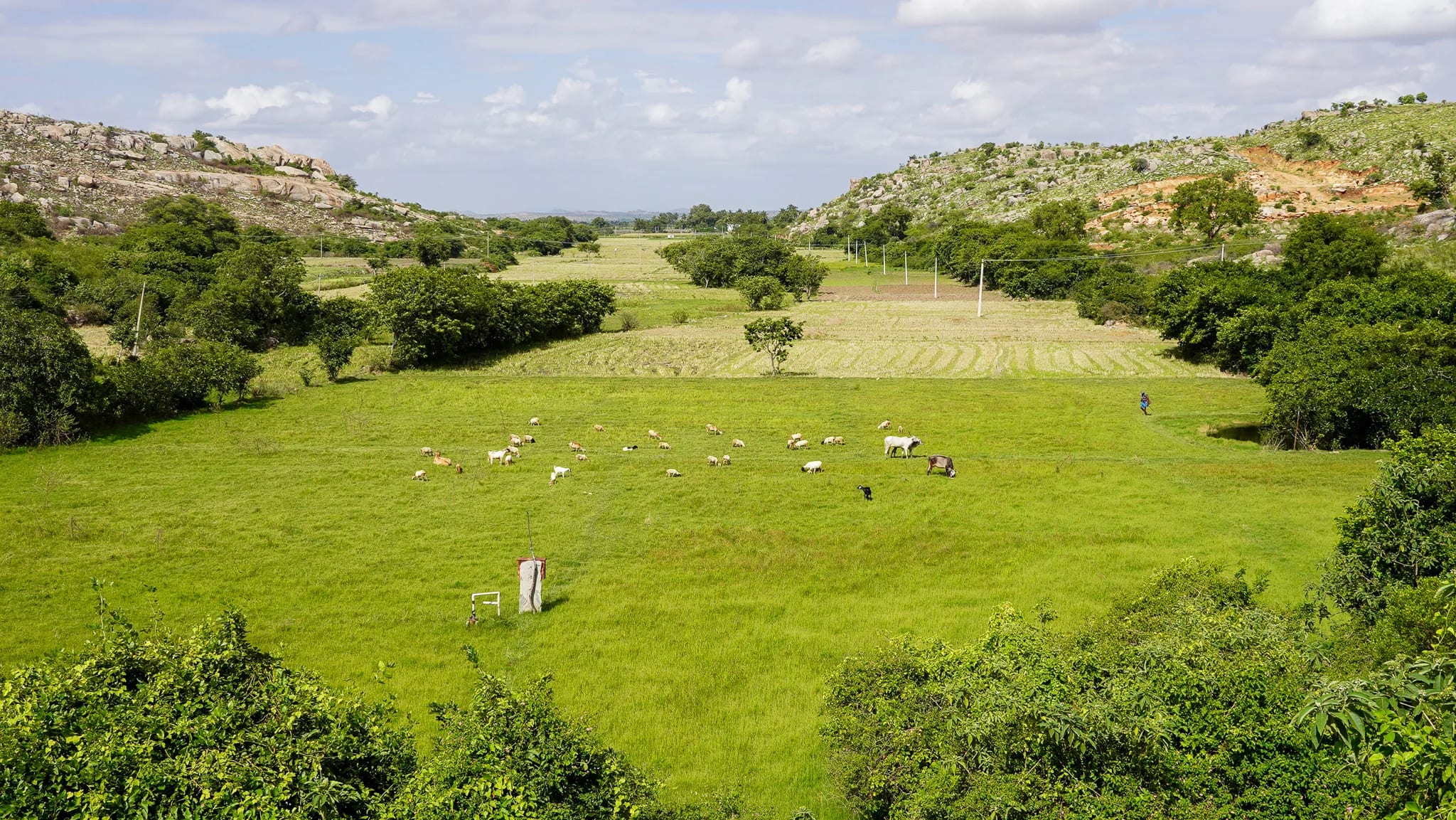
Flow to tanks reduced. As tanks began to dry, farming became difficult. Those who could afford them dug borewells. District Commissioner ordered closure of sluices, stocking of water in tanks. This rendered Neeruganti useless to the community. Only those with borewells continued to cultivate. Those without left lands fallow.
Now many farmlands lie empty. Those dependent on harvests now depend on rations from Public Distribution System. Many young people from Neeruganti families have migrated to cities.
Rajamma of Baragenahalli village remembers. When the tank was open, the community cared for it. Neeruganti would inspect the tank every day. Now that the tank is under the control of state officials, the Neerugantis have turned their attention to finding other work to sustain themselves.
07
BUT THE KNOWLEDGE PERSISTS.
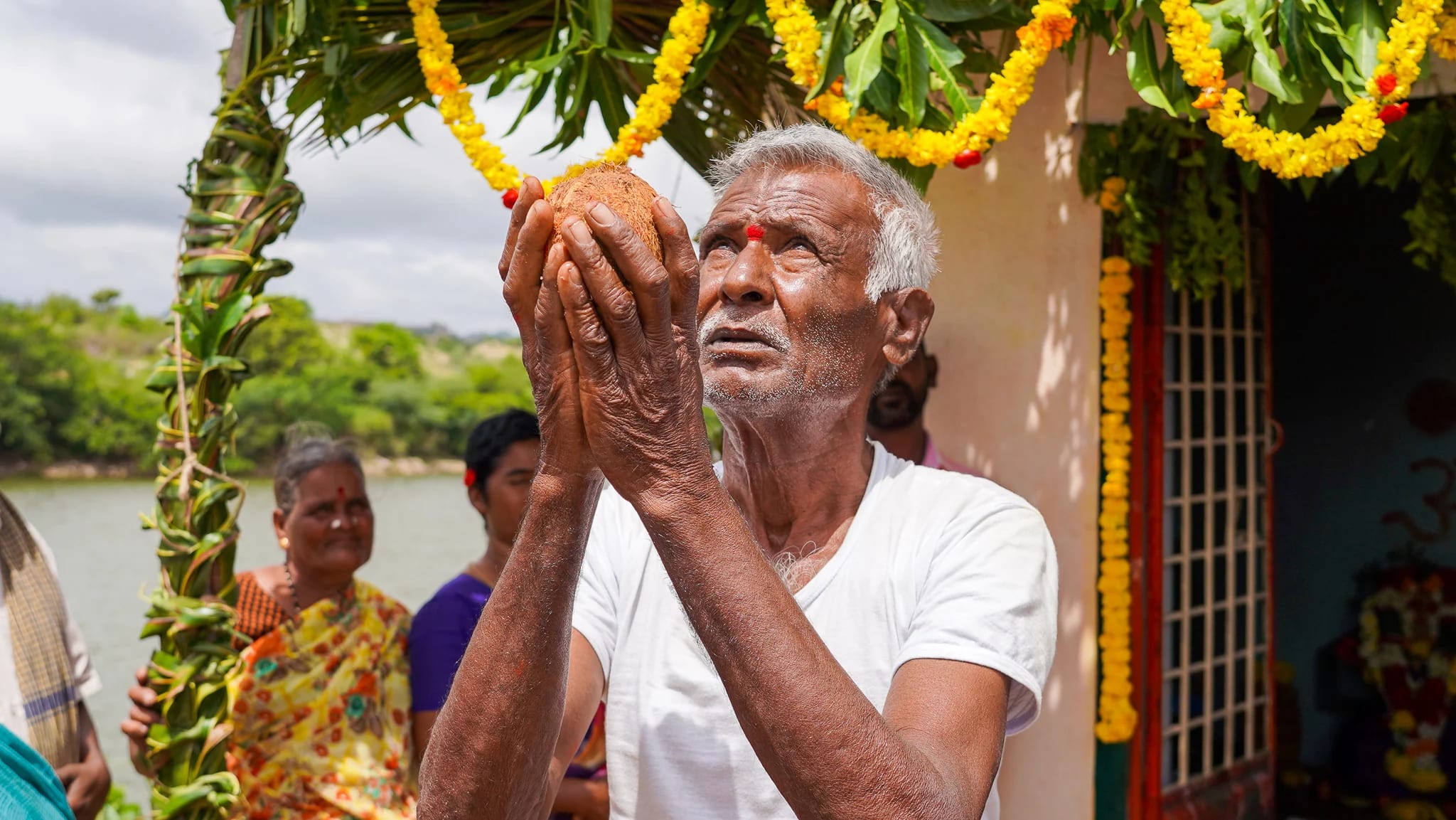
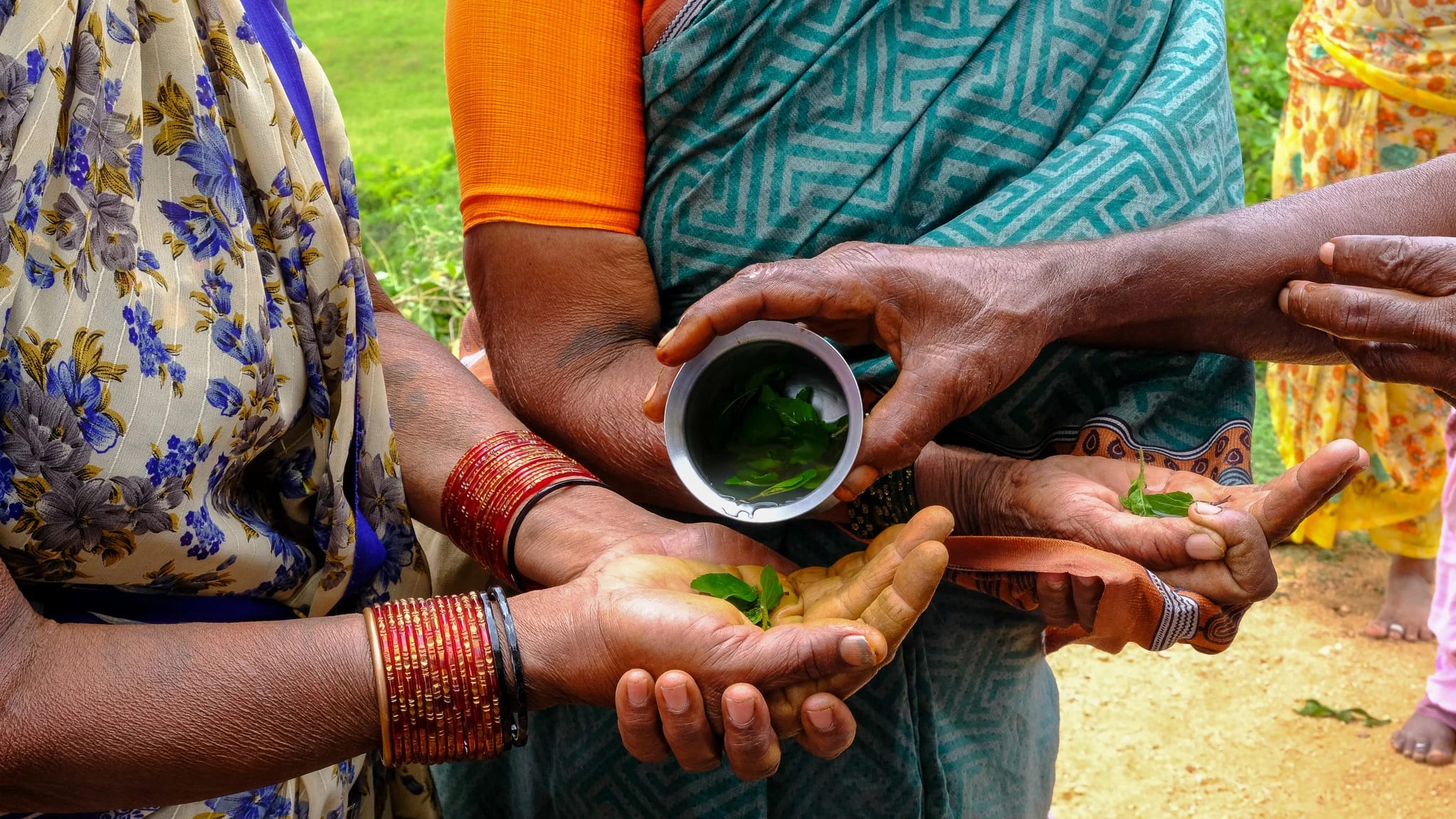
Venkatappa still knows which crops need what water, when to release it, and how to judge levels. He knows the rituals. When the tank is full, Neeruganti first pays obeisance to the goddess of the lake, Gangamma. The Neeruganti calls out to the deity, reassuring her that he is there to protect her. Gangamma protects us in return.
He performs the rituals at
a tank the government sealed.
08
THE LAKES WERE ONCE CENTRES OF DIVERSE RURAL ECOLOGIES, ECONOMIES, AND SPIRITUALITY.
Under Neeruganti care, lake habitat flourished. Sustained biodiversity that fed the local community. Farmers relied on water for irrigation and silt as manure. Shepherds used grass for grazing. Fishermen caught native fish from waters.
It's almost impossible to find native species these days. The presence of native species was a sign that the lake was healthy.
If the fish Poojappa was found in the lake, it was considered equivalent to Goddess Lakshmi being present. Ecosystems which flourished for centuries deteriorated in decades.
09
VEMANNA, A PANCHAYAT MEMBER IN THOLLAPALI, EXPLAINS WHAT WAS LOST.
If there is Neeruganti, everyone benefits. Panchayat appoints Neeruganti, entrusting work to him. They value his knowledge. In return he provides information to the panchayat. Conveys if there is leakage in the tank and if repairs are required for channels.
Very difficult without Neeruganti. The tank becomes useless without him. Loss has a great impact on fish in tanks. Panchayats used to get 100,000 to 200,000 rupees from auctioning fish. That money was used for repairing tank bunds, desilting, paying Neeruganti, electricity, and other needs. Without Neeruganti, water goes to waste, crops cannot be cultivated, and not enough fish are available.
The Neeruganti ensured equality in distributing water. Each farmer would get adequate water, the tank would be taken care of, the livestock would benefit, and the panchayat would benefit from revenue.
10
WITHOUT BEING ABLE TO ACCESS THEIR OWN RESOURCES, WITHOUT ANYBODY CONTROLLING TANKS, VILLAGERS ARE UNABLE TO MAINTAIN OR DESILT THEM.
Water stagnates and turns toxic.
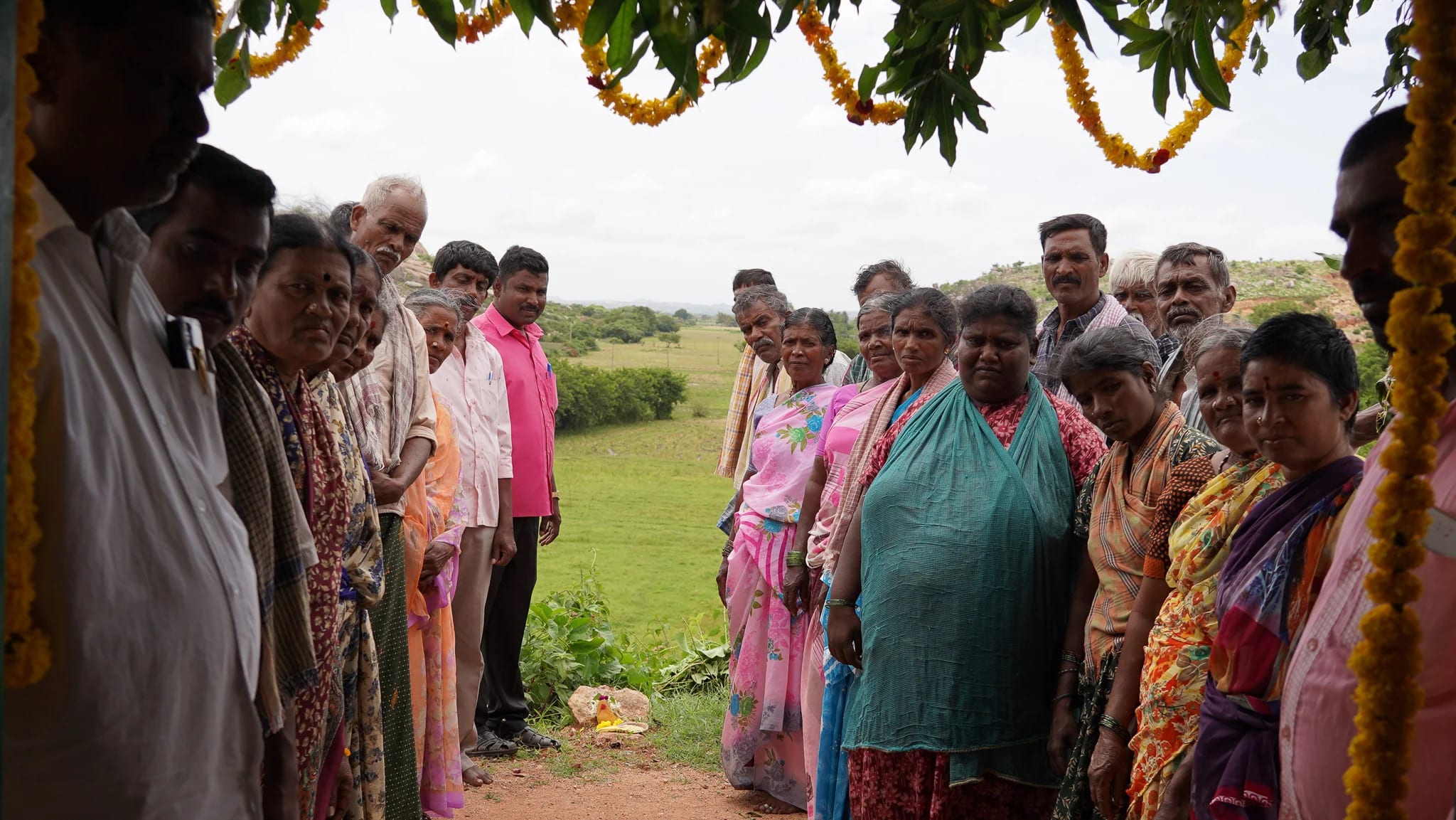
Sugunamma's husband is Neeruganti of Byraganahalli. Their children work in Bengaluru and Chikkaballapur. As of now they don't know the work of Neeruganti. If tanks are unsealed, we will teach them. We want them to continue this work.
But the tanks remain sealed. The sluices locked. The Neeruganti performing rituals at lakes they cannot manage, holding knowledge they cannot use, teaching children a profession that doesn't exist.